
AI news ·
MetLife HR chief says AI requires leaders to embrace uncertainty and build trust
MetLife launched a global AI leadership program emphasizing vulnerability. A new report finds 20% of employees are unsure of their AI expectations.
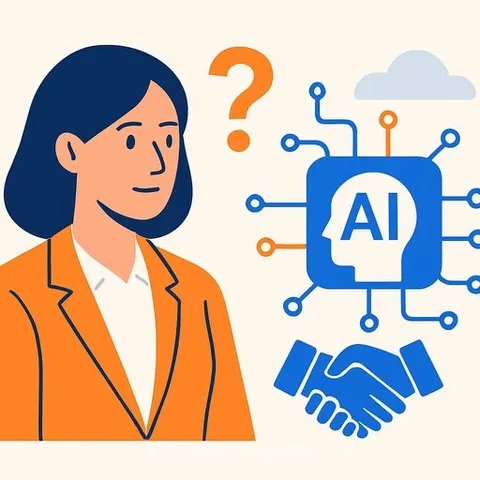
The leadership playbook for the AI era hasn't been written yet, and that's precisely the point, according to MetLife executive vice president and CHRO Shurawl Sibblies. During her first visit to Korea last week, Sibblies said the velocity of change demands a new kind of leader - one willing to admit uncertainty rather than project omniscience.
"The pace of change, the velocity, is so fast and probably unlike anything we've ever experienced," she said. That speed is what prompted MetLife to launch Lead in the Age of AI, a global program rolling out across all operations in local languages. The initiative doesn't focus on AI proficiency alone. It asks managers to rethink what leadership looks like when nobody has all the answers.
Vulnerability as a leadership strength
Sibblies argues that the willingness to admit gaps in knowledge is becoming as critical as the ability to set direction. "Making it OK to be vulnerable with your teams and say, 'I don't have all the answers, but this is what I do know, and we're going to learn together,' makes such a difference," she said. "It's a bit of humility that's required at this moment. It's authentic."
That perspective reflects a broader workplace reality. MetLife's latest Employee Benefit Trends report found that one in five employees are unsure what is expected of them as AI becomes part of their work, and nearly two-thirds are concerned about its risks. For HR leaders, helping employees build AI fluency is only half the equation. The greater challenge is ensuring they don't lose their sense of purpose or agency in the process - something that requires rebuilding trust through action, not reassurance alone. For CHROs navigating these shifts, an AI Learning Path for CHROs can provide a structured approach to leading through the uncertainty.
Trust as the new currency
At MetLife Korea, employee feedback revealed a strong appetite for greater access to AI tools. The company responded by making AI capabilities available globally and expanding training on both practical applications and responsible use. Managers now regularly demonstrate how they incorporate AI into their own workflows, while employees share use cases through Lunch & Learn sessions and peer-led discussions.
"People navigate change effectively when they feel supported, when their work is connected to something purposeful and when they feel their contribution makes a difference," Sibblies said. The Korea office has become a source of innovation for the global insurer. The 360Health digital health platform, for instance, was first developed in Korea before expanding to markets across Asia and beyond.
Adaptability over credentials
AI is democratizing access to knowledge, and Sibblies believes that will force companies to reconsider what distinguishes exceptional talent. Academic credentials and technical expertise built over years still matter, but they won't be enough. "The premium on people who are adaptable and curious, who want to continue learning and take action has gotten much higher," she said. "Learning is more democratized now with AI, and that means your career can grow in different ways."
Career paths are likely to become less linear as employees reskill and move across functions. At MetLife Korea, employees are encouraged to pursue opportunities beyond their original roles, and leaders are expected to embrace talent with unconventional backgrounds. Sibblies said companies should broaden their definition of talent beyond recent university graduates to include career changers and people who reinvent themselves through continuous learning. HR teams exploring practical applications can find resources on AI for Human Resources that address both strategic and operational concerns.
As AI grows more capable, Sibblies sees judgment as the ultimate differentiator - the ability to question AI's recommendations, make values-based decisions, and take responsibility for the outcome. "There will always be something that you can do," she said. While acknowledging that AI could displace some work, she predicted the technology would create entirely new roles that don't exist today.
Why this matters for HR professionals
Sibblies' framework gives HR leaders three concrete priorities. First, design leadership development programs that reward vulnerability and adaptability, not just technical skill. Second, build trust by translating employee concerns about AI into visible action - expanded access, transparent training, and manager-led modeling of new tools. Third, revise hiring and career-path criteria to value curiosity and cross-functional mobility alongside traditional credentials. The companies that act on these shifts now will be the ones that retain talent when the playbook finally catches up to the pace of change.