
AI news ·
Mexico's Senate proposes rules limiting AI use in workplace decisions and employee surveillance
Mexico's Senate is reviewing a bill that would require employers to disclose AI use in workplace decisions and mandate human oversight of automated hiring and performance systems. Companies would have 360 days to comply if the reform passes.
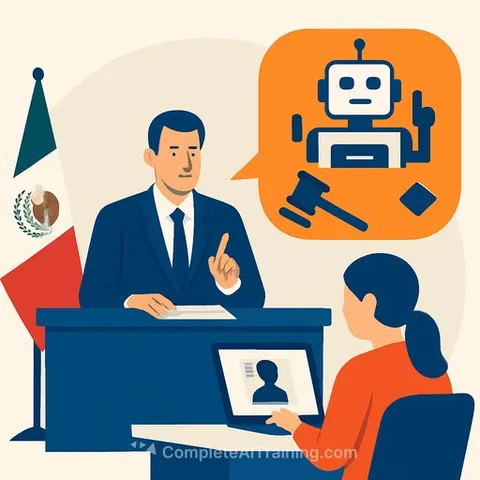
Mexico's Senate Proposes Workplace AI Rules Requiring Human Oversight
Mexico's Senate is reviewing a proposal to regulate AI use in the workplace, mandating human oversight of automated decisions, limiting employee surveillance, and requiring employers to disclose how AI systems affect workers. The reform would amend the Federal Labor Law to establish baseline obligations for companies deploying AI in hiring, performance evaluation, and task allocation.
The initiative addresses a regulatory gap as AI adoption accelerates across manufacturing, services, and administrative functions. Senator Pablo Angulo, who introduced the proposal, said the absence of rules "could allow technological innovation to advance without counterweights, directly affecting workers."
What the Proposal Requires
The reform would add six provisions to Article 132 of the Federal Labor Law. Employers using AI systems would have to:
- Disclose the use of AI in workplace decisions before implementation
- Explain the general criteria behind how algorithmic systems operate
- Ensure that decisions affecting employment cannot rely exclusively on automated processes-human validation is required
- Prohibit disproportionate surveillance through AI monitoring tools
- Provide necessary technology to workers without transferring costs to employees
The Ministry of Labor would have 180 days to issue implementation guidelines, with companies given another 180 days to adapt their internal processes.
The Skills and Leadership Gap
The proposal reflects broader concerns about how organizations are actually deploying AI. Research from the Organization for Economic Co-operation and Development suggests that around 27% of jobs in member countries face automation risk. In Mexico, the impact could be more pronounced in services, manufacturing, and administrative roles.
Most companies are treating AI as an add-on to existing systems rather than embedding it into core operations. This approach limits effectiveness and creates disparities between digital-native sectors like fintech and traditional industries including manufacturing and energy.
While 70% of Mexican workers believe AI improves productivity, adoption remains constrained by gaps in skills development. Formal training programs are not expanding at the pace required, increasing reliance on external expertise and creating internal inefficiencies.
Leadership and accountability have emerged as central factors determining outcomes. Without clear governance structures, organizations risk over-relying on algorithmic outputs without human judgment. Sofía Bentinck, CEO of Anchor Relocation Worldwide, said the risk is that "organizations begin to rely on AI as a substitute for judgment. While AI can process data, it cannot interpret context or assume responsibility."
Broader Governance Concerns
The regulatory push intersects with cybersecurity challenges. A 2026 report by Cybersecurity Ventures highlights a structural shortage of Chief Information Security Officers, with about 35,000 CISOs overseeing 359 million organizations globally. Most small and medium-sized enterprises lack dedicated oversight for managing digital risks, including those tied to AI deployment.
Cybersecurity Ventures projects that global cybercrime costs could reach US$12.2 trillion annually by 2031, with ransomware and software supply chain attacks among the fastest-growing threats.
In response, companies are adopting hybrid models combining human expertise with AI tools, such as virtual CISOs and managed service providers, to extend governance capabilities.
What This Means for HR Functions
If enacted, the reform could reshape how companies structure AI for Human Resources implementation. The proposal targets specific HR functions: recruitment automation, performance evaluation systems, and workforce analytics.
HR leaders will need to understand transparency requirements around algorithmic decision-making, compliance obligations for employee monitoring, and the mandate that human judgment remain central to employment decisions. For HR executives navigating these requirements, an AI Learning Path for CHROs covers governance frameworks and implementation strategies aligned with emerging labor regulations.
The initiative does not seek to restrict AI but to define its boundaries. Technology should enhance productivity and working conditions, not replace human labor or operate without oversight.
Mexico joins a wider global debate over AI regulation in labor markets. This legislative effort builds on recent protections for artists and performers in response to AI-generated content, signaling gradual expansion of AI governance across sectors.