
AI news ·
Microsoft adds education AI tools and training as school use outpaces formal instruction
92% of students and education leaders use AI, but 77% of students lack formal training. Microsoft launches lesson planners and student AI guidelines to address the gap.
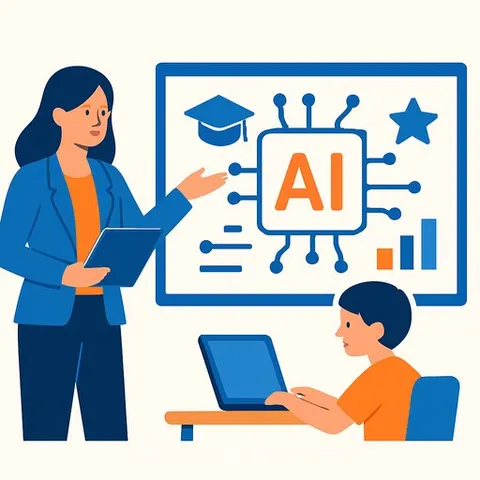
Microsoft released its third annual AI in Education Report on June 30 alongside new Microsoft 365 Education and Copilot classroom tools, revealing a split between heavy AI use in schools and thin formal training. Company-commissioned survey data shows 92% of students and education leaders and 88% of educators have used AI for school purposes, yet 77% of students and 53% of educators have received no formal AI training. The tools arriving now - including lesson planners, student AI guidelines, and guided practice features - are Microsoft's answer to that gap, but their success depends on whether districts commit to recurring training and consistent assignment-level rules.
PSB Insights surveyed 3,345 respondents across K-12 and higher education in six countries for the report. Because Microsoft commissioned the study, the figures reflect company-reported data rather than an independent global benchmark. Still, the numbers point to a practical problem for schools: AI is already woven into daily schoolwork while training cadence, administrator controls, and clear rules for students lag behind.
Training Gaps Persist Despite Near-Universal AI Use
The report's headline adoption figures mask uneven preparation on the ground. Two-thirds of educators and more than half of students said they want monthly or quarterly institutional training - a recurring need that one-off workshops cannot meet. For educators exploring structured professional development, an AI Learning Path for Teachers addresses some of the skill gaps that the report identifies, though Microsoft's own answer is a free AI Literacy credential through Microsoft Elevate for Educators, co-created with ISTE + ASCD.
Jessica Howell, vice president of Research at College Board, captured the moment directly: "Faculty are navigating this critical transition, as AI rapidly expands in higher education." Her comment underscores what the Microsoft data shows - adoption has outpaced institutional readiness, and schools are playing catch-up.
New Classroom Tools Put Guardrails Inside Microsoft 365
Microsoft is adding several educator-focused features. Unit Plans in Teach lets teachers build standards-aligned plans in minutes with global standards coverage and AI refinement. Student AI Guidelines moves acceptable-use expectations into the assignment workflow, where teachers can set rules that students see before using AI tools. Learning Zone gives teachers live classroom sessions with real-time visibility into student activity, and Learning Groups in Assignments categorizes students based on performance data.
For students, Copilot Notebooks arrives through the Microsoft 365 Copilot app at no additional cost with Microsoft 365 Education licensing. Study and Learn adds guided practice and real-time feedback inside Copilot Chat. The teaching features are rolling out to preview communities now and will reach general availability in the coming months, though access depends on local administrator settings and licensing decisions. Schools also get a one-year Learning Zone trial on Windows 11 devices, but broader deployment still runs through district IT teams and teachers' willingness to embed AI rules directly into assignments rather than burying them in policy documents.
Academic Integrity and Competing Platforms Raise the Stakes
Academic integrity remains the sharpest concern. Microsoft's report identifies it as a top worry for 41% of students and 42% of educators. College Board research separately flags student AI use in writing, plagiarism, and reasoning skills as a growing issue. Microsoft's controls and training pitch arrive against this backdrop of trust erosion - not merely as a feature update, but as an attempt to give schools enforceable boundaries inside the tools students are already using.
The competitive field is crowded. Google has Gemini education tools, OpenAI markets ChatGPT for Teachers and campus-focused products, and Anthropic has pushed Claude learning modes. Each platform frames its offering around learning support, privacy, and institutional controls. Microsoft's advantage - and its risk - lies in the depth of its existing school infrastructure through Microsoft 365 Education. Whether districts activate the new tools fully will test how quickly training can catch up with deployment.
Why this matters for educators
The Microsoft report confirms what many teachers and administrators already experience: students are using AI, often without clear guidance, and formal training is not keeping pace. The new tools give educators assignment-level control over how students interact with AI, but those controls only work if schools commit to recurring training cycles and set administrator policies before the next school year begins. For educators and district leaders building their own readiness plans, AI for Education resources offer a parallel track to Microsoft Elevate for Educators. The practical question for any school is whether training, licensing, and rule-setting are aligned before a broad rollout reaches classrooms.