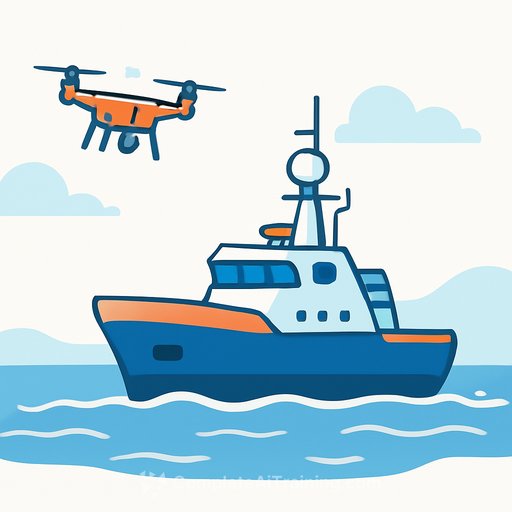
Mirai Robotics raises €3.6M to scale autonomous systems for maritime operations
Mirai Robotics, an Italian startup focused on AI-driven maritime robotics, has secured €3.6 million. The goal: push autonomous systems from pilot to practical use across ports, shipping, offshore energy, and environmental monitoring.
For operations teams, this isn't hype. It's about safer inspections, faster cycle times, and lower costs on work that's risky, repetitive, and weather-dependent.
What Mirai is building
- Autonomous surface and underwater platforms paired with AI for navigation and mission planning.
- Use cases: vessel and hull inspections, environmental monitoring, security patrols, and structured data collection at sea.
- Operational benefits: reduced human exposure, fewer manned deployments, tighter budgets, and more consistent data quality.
Why this matters for operations
Inspection backlogs, limited crew availability, and tight maintenance windows slow everything down. Autonomy helps you capture critical data on schedule, even in off-hours, without tying up specialized staff.
The bigger gain comes from repeatability. Standardized missions produce consistent datasets you can compare over time, feeding maintenance planning and incident prevention.
How the new funding will be used
- Accelerate R&D and finalize product development.
- Expand the team and run pilots with industry partners.
- Move from pilots to commercial deployments in ports, shipping, offshore energy, and environmental programs.
Translation for Ops leaders: shorter evaluation timelines, more off-the-shelf integrations, and clearer service models.
Where this fits in your operation
- Ports: quay wall and berth inspections, bathymetry updates, and perimeter patrols.
- Shipping: hull checks, biofouling assessment, and condition monitoring between calls.
- Offshore: platform surveys, subsea asset scans, and routine area sweeps.
- Environment: water quality sampling, debris detection, and protected area monitoring.
How to evaluate a pilot
- Define the job: inspection type, environment, frequency, and acceptable weather windows.
- Set hard metrics: cost per mission, time on task, coverage %, detection precision/recall, and rework rate.
- Check compliance: local port rules and evolving MASS guidance from the International Maritime Organization and EMSA.
- Integration: data formats, API maturity, handoff to your CMMS/EAM and BI stack.
- Runtime constraints: battery/endurance, comms reliability, launch/recovery logistics.
- Risk and safety: fail-safes, remote intervention, collision avoidance, and incident response.
- People: who operates, who reviews data, and how procedures change on day one.
KPIs that actually move the needle
- Inspection cycle time and mission success rate.
- Unplanned downtime avoided and maintenance lead time gained.
- Cost per inspected asset vs. baseline.
- Coverage completeness and defect detection accuracy.
- Safety incidents per 1,000 hours and near-miss count.
- Data latency from capture to decision.
Procurement checklist
- Proof on your use case: recent pilot data in similar waters and conditions.
- Service model: ownership vs. Robotics-as-a-Service, SLAs, and escalation paths.
- Security: device hardening, comms encryption, and data custody.
- Total cost: platform, payloads, training, insurance, permits, and ongoing ops.
- Roadmap: next 12 months of features and certifications that matter to you.
Risks to account for
- Sea state limits and weather cancellation rates.
- Battery endurance and swap/charge logistics during peak operations.
- Local permissions and port traffic coordination.
- Data overload without a clear triage and review workflow.
What to do next
Pick one high-value inspection that stalls your schedule. Run a 60-90 day pilot with clear KPIs and weekly reviews. If the numbers hold, expand by playbook-site by site, use case by use case.
If you're building the internal muscle for this shift, start here: AI for Operations and AI Learning Path for Transportation Managers.
Your membership also unlocks: