
AI news ·
Model Context Protocol connects AI tools to internal data for government affairs teams
Model Context Protocol connects AI to legislative trackers, addressing a top three concern for government affairs teams. It automates data gathering to save analyst time.
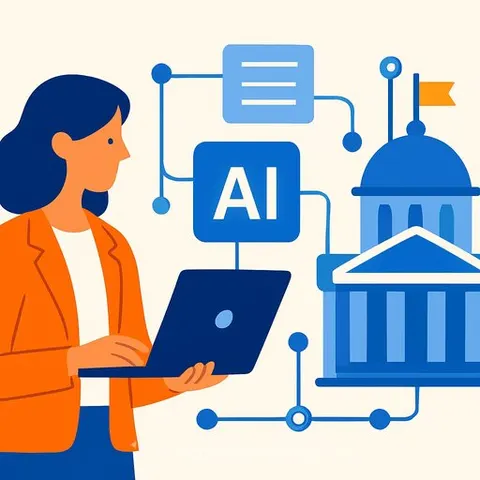
A new technical standard is giving government affairs teams a way to connect the AI tools they already use to their legislative trackers and internal business data. Model Context Protocol, or MCP, strips out the hours spent hunting and cross-referencing so policy professionals can focus on the analysis and recommendations that actually move decisions.
What MCP looks like in practice
On a Monday morning, a health system's government affairs director asks her AI tool, "What changed on scope-of-practice this week in our priority states?" The tool, connected via MCP to her legislative tracker, surfaces the bills that moved, including one that just cleared committee. She follows up: "Which of our service lines would this bill affect?" The system maps the bill's requirements against internal operations and flags two lines dependent on the staffing rules the bill changes. A third question about facility count and a fourth about revenue impact produce a rough dollar figure - the number her VP needs. Four questions, multiple data sources, and a working brief draft, all in the time it used to take just to gather the inputs.
What MCP is
Model Context Protocol (MCP) is a standard that lets AI systems retrieve information from designated data sources. Instead of relying only on what the model was trained on, the tool can reference your legislative tracker, internal records, past briefs, and other approved feeds. For a GA team, it turns an enterprise AI account into a tool that draws on real-time, organization-specific context while answering questions.
How it changes the workflow
With MCP in place, teams can load internal context - positions on key issues, historical briefs, and how the team frames recommendations - and the AI starts producing outputs that sound like the organization, not a generic assistant. The shift is simple: the hours spent assembling information become time spent applying judgment. The AI handles the look-up and the first draft, and the analyst does the part that requires experience.
What MCP doesn't do
The standard won't tell you which legislator to prioritize or how a regulatory fight will play out politically. It pulls data, summarizes bills, and surfaces patterns, but strategic judgment stays with the people who understand the landscape. Output quality depends on input quality. If a legislative tracker is incomplete or scraped from unreliable sources, the AI will confidently synthesize bad data. Even with clean data, the tool can misread a bill or miss nuance, so every answer still needs a human check. And complex, multi-year regulatory analysis isn't going to run on a prompt. What changes is where the senior analyst's time goes - away from scouting and assembly and toward the thinking that only they can do.
Getting started without a technical background
The first connections usually run through whoever administers your enterprise AI accounts. Once they're in place, using the system is conversational. Teams that move fastest follow a short sequence.
- Start with the questions you already spend an hour answering manually. Write down the five to ten queries you'd most want answered. That list tells you which data sources matter.
- Check which of those sources support MCP. Some policy trackers and internal systems connect easily; others don't. The easier the connection, the less you ask of IT.
- Have your admin wire them in. Hand off the shortlist. Connecting a vendor's policy data is usually straightforward. Wiring up internal systems like a CRM may take more work, especially where compliance and sensitive data are involved.
- Load your context and start asking. Feed in positions on key issues, past briefs, and how you frame a recommendation. Then ask your first real question in plain language.
- Test before you trust it. Run questions you already know the answer to and compare the output against your own reports. Do that for a week or two before the tool touches anything that leaves your desk.
Why this matters for government professionals
In the 2026 State of Government Affairs report, proving the value of GA work ranked among the top three concerns the profession names. When recommendations are built on live data and real internal context, leadership can see the reasoning behind them. That visibility makes it easier to act on a team's advice. For government professionals, MCP represents one of the fastest ways to make that shift, part of a broader move toward AI for Government where tools connect to operational data instead of offering generic one-size-fits-all answers.