
AI news ·
Money20/20 highlights agentic AI and embedded finance as banks shift to integrated operating models
Money20/20 leaders prioritized agentic AI and embedded finance. Embedded lending platforms now yield an average 26% sales increase for funded businesses.
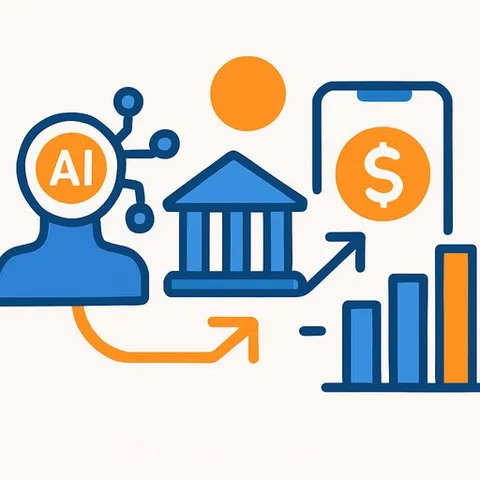
Money20/20 has surfaced a clear shift in financial services strategy, with industry leaders at the event pointing to agentic AI, embedded finance, composable banking, and modern cross-border infrastructure as the technologies that will define the next phase of banking and payments innovation. Financial institutions are moving beyond digitisation projects toward intelligent, integrated operating models designed for real-time commerce and global scale.
Agentic AI moves from back-office to front-office
One of the strongest themes emerging from the event is the rise of agentic AI - systems designed to make decisions, execute workflows, and automate complex financial processes with minimal human intervention. Unlike conventional generative AI, which assists employees by summarising data or generating content, agentic AI acts independently. The distinction matters for financial institutions balancing efficiency gains against regulatory expectations around governance and explainability.
Dave Ruda, VP of Software Products at Billtrust, said traditional RPA and static risk modeling are proving inadequate against payment delays and rising operational costs. "We are now officially in the agentic age. This shift is about replacing passive software with specialised, autonomous multi-agent ecosystems capable of independent reasoning," Ruda said. "We are talking about systems that execute complex financial logic like real-time credit adjustments and precise late-payment prevention, without a single manual bottleneck."
Ruda cautioned that as AI shifts from advisor to actor, governance becomes the critical test. "True innovation demands transparent, explainable AI workflows that surface the exact data points behind every decision, ensuring human oversight remains a legally compliant, meaningful safeguard rather than a tick-box exercise." For CFOs, this evolution changes the role from managing repetitive processes to governing an autonomous ecosystem - a shift that intersects with the broader AI Agents & Automation trend reshaping enterprise workflows across industries.
Embedded finance closes the SME funding gap
Alongside AI, embedded finance is reshaping how small and medium-sized businesses access capital. Lending is becoming an integrated service within digital platforms rather than a standalone banking product. By using real-time transaction data and open banking insights, FinTech platforms are streamlining underwriting and improving access to working capital.
Luke Trayfoot, Head of Partnerships at YouLend, said a multi-billion-dollar funding gap persists for European SMEs despite the FinTech revolution. "The future of SME liquidity no longer sits in standalone credit applications. Instead, underwriting is being embedded directly into the platforms where merchants already operate every day," Trayfoot said. He described the shift as "The Great Rebundling," where merchant capital integrates into core marketplaces and payment networks like Shopify and Stripe, turning business financing into an invisible, revenue-based utility.
Trayfoot said modern platforms evaluating live transactional and open banking metrics are achieving consistent 80-90% approval rates for applicants across Europe. "More importantly, this frictionless access to capital delivers real economic impact, yielding an average 26% increase in sales for funded businesses within just six months."
Composable banking separates experience from infrastructure
Another recurring discussion centered on how banks can differentiate in a market where digital banking experiences are increasingly indistinguishable. Ben Goldin, CEO at Plumery, said years spent chasing feature parity have produced apps that look and feel identical. The solution, he argued, is not another core system replacement.
"Banks can't build experiences that truly differentiate until they decouple the customer layer from the systems holding them back," Goldin said. "By decoupling the customer experience from downstream systems, teams can finally move at their own speed, shipping independently of the core, adopt modern engineering practices, and introducing new capabilities, including AI driven ones, when it actually makes sense for them." This approach allows banks to bring AI for Finance capabilities into production in weeks rather than years, without waiting for lengthy transformation programmes to conclude.
Cross-border infrastructure adapts to digital-first commerce
Cross-border payments and financial infrastructure also held a prominent place on the agenda as merchants increasingly operate across multiple jurisdictions. Emma Campbell, Chief Banking Officer at ONE.io, said traditional correspondent banking is becoming mismatched with digital-first sectors through delays, fragmented onboarding, and settlement windows that fail to reflect the always-on nature of modern commerce.
"The practical reality is that scaling cross border operations requires consistent KYC standards, multi currency liquidity management, and the ability to settle funds instantly without relying on long intermediary chains," Campbell said. She noted strong demand for unified financial infrastructure where fiat and digital assets coexist on the same platform, particularly in sectors like iGaming, MSBs, and Web3 where high-velocity, high-value flows demand settlement certainty.
Why this matters for finance professionals
The common thread across these discussions is a shift from standalone digital initiatives to infrastructure-led operating models. For finance professionals, the practical implication is clear: the technology decisions made today - whether around autonomous AI systems, embedded lending platforms, composable architectures, or unified payment rails - will determine how quickly an institution can scale, adapt to cross-border complexity, and deliver differentiated customer experiences. The institutions that act on these shifts now will be the ones positioned to compete in a market where speed, integration, and intelligent automation are becoming baseline expectations rather than differentiators.