AI Is Turning Research Into a Scientific Monoculture
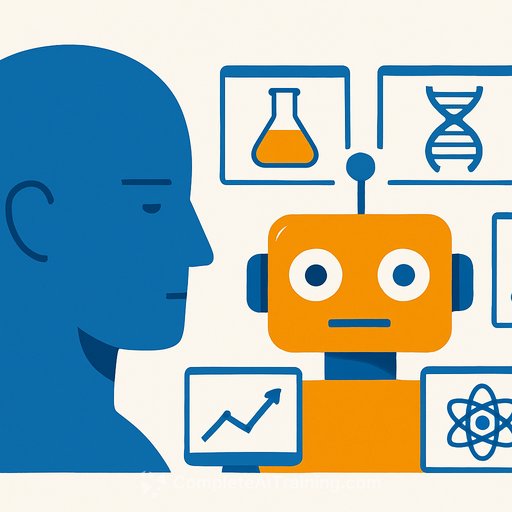
Generative AI deserves study. But the rush to cover it is creating a feedback loop that makes research topics, methods, and language converge. Speed is rewarded. Breadth is not.
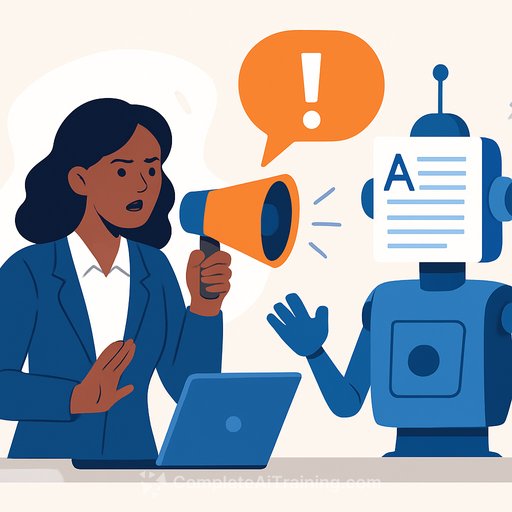
The result: fewer perspectives, copy-and-paste workflows, and a field that starts to think alike. That's risky for PR teams crafting narratives, for scientists building evidence, and for writers trying to keep a distinct voice.
The rush effect
Topicality gets funded. AI-adopting researchers publish more, get cited more, and move faster-especially when using LLMs to ideate and draft. That pace crowds out slow, divergent work that builds depth and optionality.
Large-scale trends show the spike clearly. See the AI Index's cross-field growth data here and experimental evidence on productivity gains from generative AI here.
The feedback loop (why convergence accelerates)
- Hype creates salience. Salience signals what is "relevant" and "timely."
- Incentives align. Funding calls, journals, and careers follow the signal.
- Methods standardize. LLMs become default tools for data, analysis, and synthesis.
- Language narrows. Proposals and papers reuse the same frames and phrases.
- Epistemic feedback. AI helps generate ideas about AI, further boosting visibility.
- System effect. Fields look broad on the surface but drift into meta-conformity.
Three forms of convergence
Topical: Questions get reframed through an AI lens: AI and cognition, AI and communication, AI and institutions. This pulls diverse agendas into one storyline.
Methodological: Shared pipelines dominate. LLMs handle classification, text analysis, content generation, and behavioral modeling. What's easy to compute starts to define what feels worth studying.
Linguistic: Research begins to sound the same: "trustworthy AI," "human-AI collaboration," "ethical deployment." Jargon becomes a shortcut for credibility, compressing how we frame problems.
What is at stake
- Loss of intellectual diversity: Non-AI work gets sidelined.
- Weaker triangulation: One tool class blinds us to what it can't see.
- Lower field optionality: With less heterogeneity, pivots get harder.
A path forward: build guardrails, not walls
The goal isn't to step back from AI. It's to prevent monocropping by adding friction in the right places and rewarding range over sameness.
Funding diversification
- Reserve protected budgets for non-AI topics across agencies, universities, and departments.
- Require mixed portfolios in large grants: at least one non-AI workstream per award.
- Score proposals on contribution beyond topical buzz: theory, originality, and long-term value.
Methodological rotation
- Set rotation targets: experimental, qualitative, ethnographic, design-based, and computational tracks in parallel.
- Create "LLM-optional" workflows for ideation, coding, and analysis to preserve human judgment.
- Fund maintenance of non-computational expertise so it doesn't atrophy.
Editorial and review practices
- Pair AI-centric submissions with reviewers from diverse methods and theories.
- Add a "conceptual breadth" criterion to peer review scorecards.
- Actively solicit non-AI special issues and mixed-method symposia.
Institutional incentives
- Reward depth, originality, and field service alongside output volume.
- Credit slow projects and heterodox agendas in promotion criteria.
- Limit "AI-everywhere" pressures by decoupling performance metrics from tool use.
For PR and communications teams
- Ban boilerplate. Build a live list of phrases to retire and replace with clear, specific language.
- Run message diversity checks: test at least three distinct frames before launch.
- Guard against AI-flattened copy. Draft key narratives by hand, then edit with AI as a second pass.
- Use audience panels, not just LLM feedback, to stress-test claims and tone.
- If you need structured upskilling, explore AI for PR & Communications.
For scientists and research leaders
- Pre-register dual tracks: one AI-assisted, one non-AI, compare insights and blind spots.
- Adopt lab quotas: minimum percentage of projects that are non-AI or multi-method.
- Audit LLM reliance: idea generation, coding, analysis, writing-track where AI enters.
- Broaden seminars and hiring to protect non-computational expertise.
- For practical workflows that keep pluralism intact, see AI for Science & Research.
For writers and editors
- Start drafts without AI to preserve voice; use models for variant generation and cut passes.
- Create a "voice fingerprint" (cadence, vocabulary, structure) and enforce it in edits.
- Maintain a swipe file of fresh metaphors and verbs; retire dead phrases weekly.
- Source ideas offline: interviews, field notes, and books outside keyword trends.
- Want structured practice? Check out AI for Writers.
What to measure now
- Topical breadth: diversity of subjects and fields over time.
- Linguistic entropy: variance in framing, metaphors, and claims.
- Method mix: share of studies using non-AI methods or multi-method designs.
- LLM-dependence index: where AI enters the pipeline and how much it steers outcomes.
- Epistemic drift: how often questions are reframed to fit tools rather than goals.
Bottom line
AI can extend our reach. It can also make us think alike. The fix is not retreat-it's range: protect diverse topics, rotate methods, vary language, and reward depth over speed.
If we warn that AI might flatten human judgment, we shouldn't let it flatten our own.
Your membership also unlocks: