
AI news ·
Most doctors now use AI in clinical practice but training fails to keep pace with adoption
Nearly 60% of doctors now use AI in clinical work, with over 20% relying on it daily. But most lack formal training on its risks, and that gap is becoming a patient safety concern.
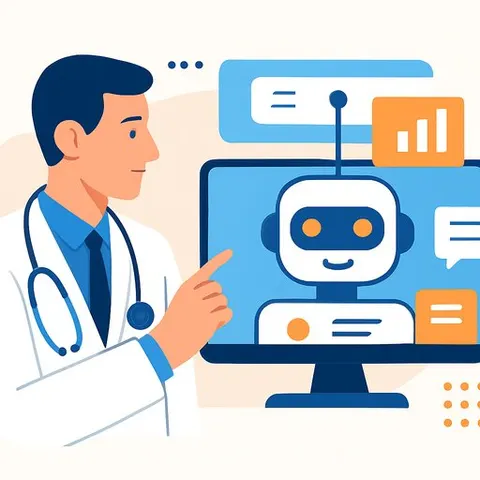
Nearly 60% of Doctors Now Use AI in Clinical Practice-But Training Lags Behind
A recent survey found that almost six in ten doctors have already integrated AI into clinical work. Over 20% use it daily. This marks a shift from experimentation to routine adoption across hospitals and clinics.
Doctors are using AI to draft patient notes, suggest diagnoses, summarize medical histories, and reduce administrative work. The tools assist with clinical reasoning by identifying patterns in large datasets that might otherwise go unnoticed. In diagnostics and chronic disease management, AI is already demonstrating measurable value.
The efficiency gains are real. Fewer administrative tasks means less burnout. Better decision support means faster, more informed clinical choices.
The Training Gap Is Growing
Here's the problem: adoption is outpacing education. Many doctors using AI lack formal training on its limitations, biases, and failure modes. Concerns about data privacy, patient safety, and over-reliance on AI outputs are mounting alongside usage.
Research shows that both clinicians and patients can place excessive confidence in AI-generated outputs, even when accuracy is uncertain. Without understanding how these tools work-and when they don't-errors can follow. Lack of transparency and limited knowledge about the technology remain significant barriers.
In medicine, precision matters. Misjudgment can harm patients.
AI Literacy Is Now a Core Competency
Healthcare organizations that recognize this gap are investing in structured training. Doctors need frameworks for safe, effective AI use. They need to know when to trust AI outputs and when to question them.
Programs that deliver standardized, industry-aligned training at scale help institutions ensure their staff are informed decision-makers, not just tool users. This distinction separates reactive adoption from strategic implementation.
Learn more about AI for Healthcare and how organizations are building AI literacy across their teams.
AI as Collaborator, Not Replacement
AI is redefining the doctor's role, not eliminating it. The technology acts as a collaborator-enhancing productivity while leaving critical judgment in human hands. But this only works when both the human and the AI are strong.
As AI evolves, human expertise must evolve alongside it. The survey makes this clear: adoption is already here. The next phase is education.
Healthcare leaders now face a choice. They can allow AI to grow organically, with its inconsistencies and risks, or invest in training that ensures safe, ethical, and effective use.
The future of medicine will be powered by professionals who know how to use AI-not just by the AI itself.
What Doctors Are Actually Doing With AI Today
- Generating and summarizing clinical documentation
- Supporting diagnostic decision-making
- Analyzing patient histories and identifying patterns
- Reducing administrative burden and freeing time for patient care
Key Concerns Healthcare Leaders Need to Address
- Data privacy and security
- Patient safety and AI errors
- Over-reliance on AI without understanding its limitations
- Lack of transparency in how AI systems make recommendations
- Insufficient clinician training on responsible AI use
Understanding Generative AI and LLM technologies helps healthcare professionals use these tools more effectively and identify where they add genuine value.