
AI news ·
Most IT pros report encountering AI hallucinations with operational impact, Ivanti survey finds
68% of IT professionals have personally witnessed AI hallucinations with potential operational impact, per Ivanti's 2026 survey of 1,500 pros. Yet 49% of advanced AI users fully trust AI-generated outputs that influence IT decisions.
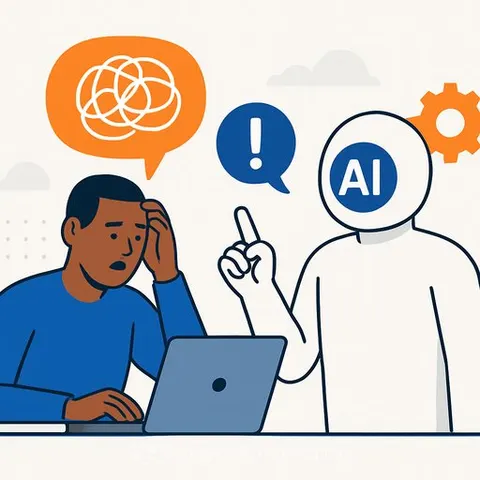
Most IT Pros Have Seen AI Make Operational Mistakes
Autonomous AI is now taking direct action inside enterprise IT environments. Software restarts services, isolates risky devices, and applies patches without waiting for human approval. The capability is spreading even as IT professionals report frequent encounters with AI errors that can disrupt operations.
Ivanti's 2026 AI Maturity Report surveyed 1,500 IT professionals across six countries and found that 68% have personally witnessed AI hallucinations with potential operational impact. About 52% of those respondents caught the errors before they caused problems. The remaining 16% saw errors slip into production environments.
Trust grows despite failures
The same population that has seen these failures continues to trust AI-generated outputs. Among the most advanced AI users in IT operations, 49% say they completely trust AI-generated outputs that influence IT decisions. Trust increases with individual experience, and exposure to AI failures climbs alongside it.
Autonomous action is widening across IT operations. Among surveyed professionals, 52% report AI autonomously adjusting performance settings, 50% report AI isolating risky devices, 47% report AI restarting services or processes, and 46% report AI applying patches or fixes. For mature AI organizations, these autonomous applications run at more than double the rate of less mature peers. Across all organizations, 46% of IT operations are expected to be automated by AI within 18 months.
Where humans still decide
IT professionals draw firmer boundaries around high-severity work. 55% say they would never rely on AI without human review for high-severity incidents, and 52% say the same for communicating incidents to executives or stakeholders. A two-tier model is emerging: routine remediation runs autonomously, and consequential decisions require human validation.
Governance lags behind deployment
Governance has become the most commonly cited barrier to AI deployment. 27% of IT professionals identify governance, security, or compliance concerns as their organization's biggest obstacle, ahead of skills shortages (20%), technology limitations (17%), and data challenges (14%).
Most organizations report baseline governance structures in place. 65% have AI risk review processes, 59% have policies for evaluating and approving new AI solutions, 58% have acceptable AI use policies, and 49% have AI oversight bodies. But adherence is uneven. Among companies that have AI policies, only 24% of employees say the policies are followed very consistently in day-to-day work.
Accountability presents a larger gap. 85% of IT professionals claim there is a named, accountable owner for every AI agent and workflow in their organization. Only 42% report that accountability holds up in practice. The 43-point gap exists because AI capabilities have moved into IT operations faster than ownership and escalation structures could follow.
Shadow AI and hidden use
Employees using unsanctioned AI tools to bypass slow approval processes undermine existing governance structures. Regulated industries including government, healthcare, and education show the highest rates of unsanctioned AI tool use and the lowest rates of employer-provided tools.
Organizational leaders hide their AI use at a rate of 42%. Among other employees, that rate is 23%. 52% of leaders who hide their AI use cite a desire for a "secret advantage."
Matching governance to maturity
Governance maturity climbs alongside AI maturity. 69% of organizations at scaled, business-critical AI use report comprehensive governance in place. At early-experimentation organizations, that figure is 15%.
A practical approach is to codify trust thresholds by workflow. Allow AI to autonomously restart failed services or apply routine patches. Require human validation for system-wide configuration changes or emergency incident responses. This approach captures autonomous remediation gains while containing the operational blast radius from hallucinations or faulty signals.
For operations teams managing this transition, understanding where to draw these lines-and making them explicit-has become as important as the AI capabilities themselves. An AI learning path for IT managers can help teams build the governance structures and decision frameworks needed to operate safely at scale.