
AI news ·
Most K-12 teachers say AI will have bigger impact on education than the internet, poll finds
73% of K-12 teachers say AI will reshape education more than the internet did, an NPR/Ipsos poll of 545 teachers found. Most also worry it's eroding critical thinking and trust-and half say their schools offer no guidance.
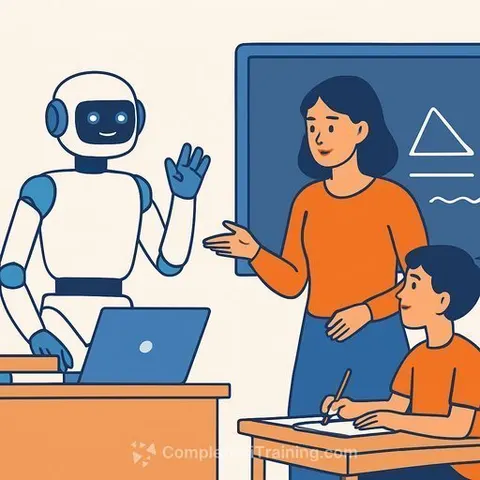
Nearly 3 in 4 K-12 Teachers Say AI Will Reshape Education More Than Internet or Computers
An NPR/Ipsos poll of 545 K-12 teachers found that 73% believe AI will have bigger implications for education than past innovations like the internet or computers. Yet teachers remain divided on whether those changes will help or harm student learning.
The survey reveals a tension at the heart of classrooms today: Teachers are using AI to save time on administrative work, but most worry the technology is undermining students' ability to think critically.
Teachers Use AI for Grading and Planning, Not Instruction
Six in ten teachers say they've used AI for work tasks. The time savings are real but modest-63% report saving two hours or less per week.
Michele Naber, a biology teacher at El Toro High School in Orange County, California, uses AI to generate multiple-choice test questions. What normally takes an hour now takes five minutes. She also uses the technology to teach students how to verify chatbot responses against reliable sources.
Joann Purcell, a math teacher in the Chicago suburbs, has found AI useful for creating professional development activities. But she doesn't use it in her classroom because the math questions contain errors. "If I have to go through and fix those mistakes, I might as well just write the question myself," she said.
Student use of AI in classrooms remains limited. Slightly more than half of teachers say students don't use AI in class at all. About 40% say students use it at least once a week.
Teachers Fear AI Is Becoming a Shortcut, Not a Tool
Fifty-four percent of teachers say AI makes it harder for students to learn critical thinking skills. Fifty-five percent believe students use AI mostly to avoid doing work.
Christa Corricelli, a special education teacher near Boston, worries that students who aren't already self-motivated will lose critical thinking abilities over time. "I think people who are not already that personality type, we're going to see those critical thinking skills atrophy," she said.
Some teachers see value in AI for specific student populations. Ellie Rodriguez, a special education teacher in Florida, praised a student on the autism spectrum for using AI to complete an assignment he couldn't finish alone. But she worries the technology could harm students who are capable of working without it.
Naber said what frightens her most is the possibility that students will stop questioning AI's outputs. "If we stop questioning what it says, we can be led to believe anything," she said.
AI Is Straining Student-Teacher Trust
Nearly 60% of teachers say AI is eroding trust between students and educators. Teachers have responded by requiring more assignments to be done by hand or in class.
Naber stopped offering extra credit for outside-school projects after her son showed her how easy it is to generate fake images with AI. She now requires all lab work to happen in her classroom and reduced homework's weight in final grades.
Josh Kauffman, who teaches seventh-grade English at a virtual public school in Alabama, has noticed a sharp increase in AI-generated assignments. Without the ability to require in-class work, he appeals to students directly: "I would rather deal with all of your typos and know that they're yours than to wonder how much you're standing on other people's shoulders."
Joann Purcell disagrees that AI has fundamentally changed the trust dynamic. Students found ways to cheat long before AI, she said. "Teachers need to be creative in how they use it and force kids to think with it just like they would with any other tool."
Schools Are Offering Little Guidance
About half of all teachers say their school hasn't offered any guidance on AI, or they're unsure what the guidance is. Only 35% of teachers at schools with AI software report having a formal policy on teacher use.
Just 40% of teachers say their school offers professional development or training related to AI.
Rodriguez said she hasn't received any training. "They need to teach us how to apply that information to what we do and most importantly to how we teach to be able to utilize it in a positive way," she said.
Corricelli said schools are often slow to adapt to change. "I think we're all just kind of trying not to drown with the whole thing," she said.
Teachers Want Schools to Teach Responsible AI Use
Nearly 80% of teachers believe schools should teach students how to use AI responsibly. This finding signals that educators recognize AI isn't going away and that action is needed now.
Mallory Newall, senior vice president at Ipsos, said the data shows teachers understand AI has "humongous implications on education as we know it." The question is whether schools will provide the training and policies teachers need to manage those changes.
For educators looking to build their own AI skills, the AI Learning Path for Teachers covers classroom tools, lesson planning, and responsible AI use in education.