
AI news ·
Most patients trust AI health answers but expect doctors to verify them, survey finds
Over half of patients now use AI to research health conditions, but 78% expect doctors to verify those answers. Healthcare AI spending hit $1.4B in 2025, yet clinicians remain skeptical-77% validate AI outputs before acting on them.
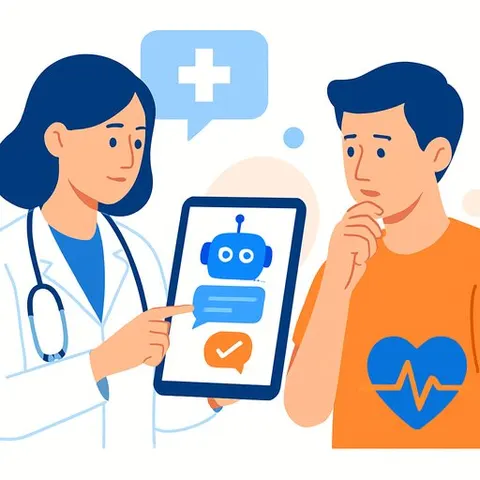
AI Adoption in Healthcare Hits 52% Among Patients, But Trust Lags Behind
More than half of patients now use AI to research health conditions and drug interactions, while clinicians leverage the technology for literature summaries and data analysis. Yet a significant gap persists: 74% of patients trust AI-generated health answers, but 78% expect their doctors to validate that information against other sources.
Healthcare AI spending reached $1.4 billion in 2025 as organizations faced mounting pressure from staffing shortages, aging populations, and cost constraints. The sector, historically slow to adopt new technology, is now moving aggressively to deploy AI in clinical workflows.
How Clinicians and Patients Are Using AI Today
Patients are bringing AI-researched information into appointments. Sixty percent of clinicians say they now spend appointment time reviewing and discussing AI-generated health information that patients bring with them.
Doctors use AI primarily for high-burden, low-risk tasks. Fifty-four percent use it to summarize medical literature, and 49% use it for literature-based discovery. Nurses follow a similar pattern: 43% use AI to summarize medical literature or analyze data, while 41% generate patient education materials with it.
This shift is producing benefits. Seventy percent of patients and clinicians agree that AI is improving patient health literacy and engagement.
The Validation Problem
Clinicians are skeptical of AI outputs. Seventy-seven percent of doctors and nurses say they "always" or "often" validate AI-generated health information before using it. More than half believe clinical AI should be built by trusted medical resources, not technology companies.
The concern is justified. A recent study published in Nature Medicine found that ChatGPT under-triaged roughly half of healthcare emergencies in testing. Meanwhile, 69% of patients report concern about AI hallucinations-yet their confidence in AI answers remains high.
The use of unvetted AI tools in healthcare is rising. Ninety-two percent of doctors and 90% of nurses say human expert oversight of AI systems and their data sources is very or somewhat important.
What Drives Real Value
Healthcare leaders seeing tangible returns from AI share common practices: they deploy clinical-grade AI on specific high-impact workflows, use validated data sources, maintain human oversight, and integrate tools to reduce clinical workload rather than add steps.
Ninety percent of physicians and nurses cite technology that enhances efficiency as a top organizational priority over the next three years. The second priority is professional development and clinical training; the third is AI that reduces time spent on electronic health record tasks.
The opportunity for healthcare organizations lies not in chasing new AI applications, but in thoughtful deployment of trusted tools. Leaders who prioritize AI trained on verified sources, with human review built in, and integrated into existing workflows will see the strongest returns-both for clinical teams and patient outcomes.
At a moment when healthcare access and system sustainability face real pressure, responsible AI adoption is becoming a strategic necessity, not an option.
Learn more: AI for Healthcare and AI Research Courses offer training for professionals implementing these tools in clinical settings.