MSPs are using AI to boost customer service: what support leaders should do next
Fresh data from POPX's State of the MSP industry report shows near-universal AI adoption across the channel. Only 1% of organisations report no use of AI or automation. For customer support teams, that shift is already visible in faster response times, smarter triage, and tighter security.
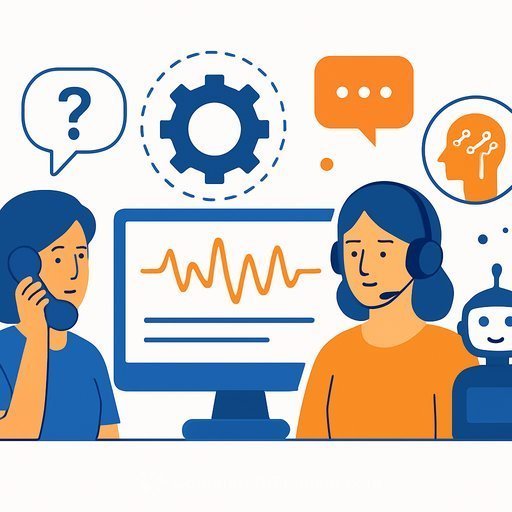
The headline: 80% of MSPs now use AI chatbots to improve customer experience and support. That change frees people for higher-value work, with 65% saying AI has returned time to their teams.
What AI is doing for service desks
AI is driving clear operational gains. 62% of MSPs report improved efficiency, revenue signals from AI-enabled services, and cost savings. Over half (51%) track AI's impact in real time, and 98% say AI has improved customer satisfaction through faster responses and clearer communication.
It's still early for many. High implementation costs and a lack of internal skills are slowing about a third of teams. The opportunity is there; execution is the gap.
- Deploy chatbots where they help first: FAQs, password resets, basic "how-to" flows, account status, and appointment changes.
- Route smarter: Use AI to classify intent and urgency, then auto-assign to the right queue or specialist.
- Agent-assist: Summarise tickets, suggest replies, surface related KB articles, and flag tone or compliance risks before sending.
- Content engine: Auto-draft and refresh KB articles based on trending tickets and deflection gaps.
- Measure what matters: Track CSAT, FCR, average handle time, deflection rate, time to first response, and backlog burn.
Security is a front-line expectation
Security expectations are rising: 48% of MSPs say clients now expect stronger data controls from suppliers. In response, 80% use AI-driven threat detection and cyber security tools. The tough part is rolling AI out with confidence across the business while meeting compliance demands.
44% report security or compliance friction when adding new customer service tech, and nearly half struggle with legacy frameworks that weaken their security stance. The takeaway for support leaders: security is now part of service quality.
- Govern models and data: Set rules for PII handling, redaction, retention, and access. Keep audit trails.
- Validate outputs: Human-in-the-loop for sensitive replies. Require citations for any policy or legal claims.
- Harden integrations: SSO, least privilege, network segmentation, and vendor risk reviews.
- Operational readiness: Incident playbooks for AI misfires, abuse, data leakage, and service outages.
- Use a common baseline: Map controls to a recognised framework such as the NIST Cybersecurity Framework.
What's next: predictive, proactive, personal
Looking ahead, 68% of MSPs expect AI to drive meaningful business change in 2026. 82% already use chatbots, with another 16% planning rollouts. Predictive analytics is rising too, helping teams spot issues early and act before a ticket is raised.
Most partners tie quality to customer feedback, SLAs, and performance reports. Many are moving to CRM integration to bring context into every conversation. 12% are planning acquisitions, signaling further consolidation and new service bundles.
- Predictive support: Alert customers before failure, schedule fixes off-peak, and pre-approve standard remedies.
- Proactive comms: Status pages, incident templates, and triggered updates by segment or account tier.
- Context in the console: Pull CRM, contract, device, and usage data into the agent view.
- Quality program: Calibrate AI + human QA weekly, track false positives/negatives, and tune prompts and policies.
- Change management: Short sprints, clear playbooks, and coaching so agents trust the tools.
Metrics that keep AI honest
- Deflection rate: % of issues solved without a human. Pair with CSAT to avoid deflecting the wrong work.
- First contact resolution (FCR): Higher FCR with stable CSAT means your bot and routing are effective.
- Time to first response (TTFR): AI should reduce it; watch for quality dips.
- Average handle time (AHT): Aim for shorter with equal or better resolution quality.
- CSAT/NPS by channel: Compare bot, email, chat, and phone to spot friction.
- Agent assist adoption: Usage, suggestion acceptance rate, and time saved per ticket.
Skill up your team
The skill gap is real, but fixable. Focus training on prompt quality, data hygiene, policy-aware responses, and secure workflows. Short, role-based courses help teams move fast without breaking trust.
Useful starting points include practical prompt work, automation basics, and job-specific paths for support roles. See curated options by role here: Complete AI Training - Courses by Job.
Leader viewpoint
POPX CEO Andy Venables noted that AI is reshaping MSP operations and client satisfaction, and that security choices will influence long-term trust. His message aligns with the data: adopt with intent, measure outcomes, and keep security tight as you scale.
Bottom line
AI is now table stakes for service desks. The teams winning on customer experience pair chatbots and agent-assist with clear guardrails, disciplined metrics, and steady iteration. Start small, prove value, and expand with security and compliance baked in from day one.
Your membership also unlocks: