
AI news ·
Multimodal AI integrates diverse health data to improve diagnostics and proactive patient care
Multimodal AI combines health data to boost diagnostic accuracy by 2-7% over single models. This helps clinicians spot patient risks earlier and cut avoidable hospital visits.
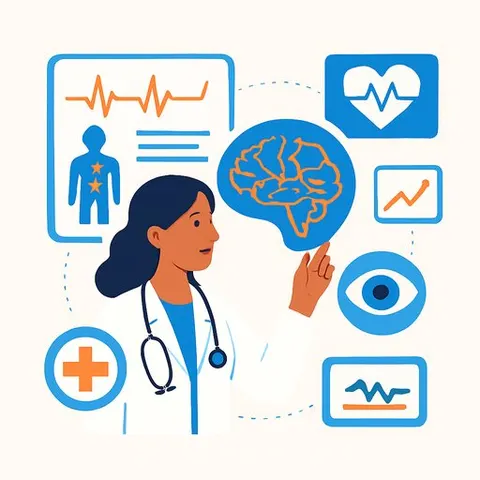
Multimodal AI is emerging as the next advance in predictive healthcare, bringing together diverse data types-from clinical notes and lab reports to wearable signals and genomics-to give clinicians a more complete view of a patient's health. This approach addresses care gaps caused by fragmented information and delayed decisions, according to a recent analysis by Tata Elxsi's healthcare practice.
Converging Data Silos into Clinical Intelligence
Healthcare data often sits in isolated systems: imaging results in one place, medication history in another, and wearable signals in a third. Multimodal AI's biggest promise is connecting these silos. When analyzed together, these modalities can improve diagnostic accuracy and prognostic prediction over single-modality models, research shows. In India, the Ayushman Bharat Digital Mission (ABDM) and its ABHA framework are creating the interoperable backbone needed, though public and private systems still remain separate in many areas.
From Reactive Care to Proactive Risk Stratification
Instead of waiting for symptoms to become severe, multimodal AI enables health systems to identify risk earlier. By combining claims data, electronic health records, and wellness signals from wearables, AI can build risk profiles and segment patients into cohorts-such as those at high risk for diabetes-and further stratify them by severity. This proactive approach helps reduce avoidable hospital visits, emergency admissions, and long-term complications, shifting the focus toward population health management.
Enhancing Diagnostic Accuracy and Reducing Bias
Clinical diagnosis is complex, and even skilled professionals can miss patterns when data feels incomplete. Multimodal AI strengthens accuracy by comparing signals across different data types. Studies in oncology, ophthalmology, and radiology show accuracy gains of 2-7% and AUC improvements of 4-5% over single-modality systems. These models also help reduce certain forms of human bias by anchoring decisions in a broader evidence base. The technology doesn't replace clinicians; it adds a more complete decision-support layer. As these systems move into practice, healthcare teams are seeking AI for Healthcare Courses to build expertise in data integration and model validation.
Real-Time Clinical Decision Support
Speed matters in acute care. Multimodal AI can process vitals, imaging updates, lab results, and monitoring data continuously to help care teams detect deterioration sooner and adjust treatment plans faster. If wearable signals, symptoms, and recent tests all point toward rising risk, the system flags the pattern before a crisis unfolds. This capability improves triage, care coordination, and timely intervention.
Ethical AI, Data Privacy, and Regulatory Readiness
For multimodal AI to work, patients must trust the system. That requires transparency, consent, and strong governance. Cybersecurity is critical-healthcare remains a top target for breaches and ransomware. In India, the Digital Personal Data Protection (DPDP) Act 2023 and ABDM's consent protocols set clear guardrails. The FDA's 2025 draft guidance also stresses cybersecurity risk management for AI-enabled device software. Organizations must treat privacy-by-design, explainable AI, bias monitoring, and cybersecurity as non-negotiable from day one.
Why this matters for healthcare professionals
Multimodal AI will not replace clinical judgment but will change how data is used in everyday decisions. Professionals who understand how to integrate and validate these models will be better positioned to lead care teams, improve diagnostic accuracy, and design proactive care pathways. Building skills in data harmonization, model interpretability, and ethical AI deployment is becoming as important as traditional clinical expertise.