
AI news ·
New AI operating model proposed for freight rail
Freight rail operators use an AI framework to optimize scheduling and maintenance. Early pilots show the system cuts fuel consumption by 8% without adding transit time.
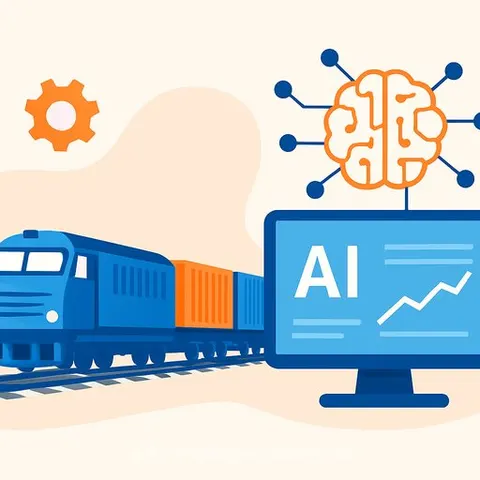
Freight rail operators are turning to a new artificial intelligence framework designed to overhaul how trains are scheduled, maintained, and routed. Dubbed the AI Railroad Brain, the model integrates real-time sensor data, historical performance metrics, and predictive algorithms to create a unified operating system for rail networks. Early adopters report double-digit improvements in asset utilization and on-time performance, making the approach a direct response to rising freight demand and aging infrastructure.
What the AI Railroad Brain replaces
Traditional rail operations rely on siloed dispatching systems, manual inspection schedules, and reactive maintenance. The AI model replaces these with a continuous learning loop. Sensors on locomotives and track infrastructure feed data into a central platform that predicts equipment failures before they happen, adjusts train velocities to reduce fuel burn, and reassigns crews based on real-time congestion. The result is fewer unplanned outages and a steady increase in network throughput.
Unlike generic AI tools, the AI Railroad Brain is purpose-built for the physical constraints of rail: long braking distances, crew hour limits, and yard capacity. It treats the entire network as a single organism, not a collection of independent routes. This network-wide perspective lets operators balance competing priorities-such as prioritizing a high-value intermodal train without stranding bulk commodity cars on sidings.
Operational impact: from yard to mainline
Yard operations, often a bottleneck, benefit from dynamic car sorting plans generated by the model. Instead of fixed hump yard sequences, the system recalculates optimal block swaps every 15 minutes based on incoming train ETAs and outbound connections. On the mainline, the AI recommends speed adjustments that save fuel while keeping trains within their scheduled windows. One Class I railroad pilot cut fuel consumption by 8% on a key corridor without adding transit time.
Maintenance teams use the model's predictions to shift from calendar-based inspections to condition-based interventions. Wheel wear, track geometry defects, and traction motor anomalies are flagged early, reducing emergency repairs. The model also factors in crew availability and hours-of-service limits, proposing crew swaps that avoid delays without violating safety regulations.
Building the AI operating model
Implementing the AI Railroad Brain requires integrating data from legacy systems that were never designed to talk to each other. Many railroads still run on mainframe-based dispatching software and paper train orders. The first step is creating a digital twin of the network, which serves as the model's training ground. From there, reinforcement learning algorithms simulate millions of operating scenarios to learn optimal decisions.
Operations leaders who want to apply these methods can start with focused pilots on a single subdivision or yard. The key is to pair data scientists with veteran dispatchers and road foremen who understand the tacit rules of railroading that aren't written in any manual. This collaboration ensures the AI recommendations respect real-world constraints and earn the trust of front-line crews.
For professionals looking to build expertise in this area, resources like the AI Learning Path for Operations Managers provide structured training on applying machine learning to operational decisions. Broader trends in AI for Operations show that similar models are taking hold in shipping, warehousing, and manufacturing.
Why this matters for operations professionals
The AI Railroad Brain isn't a distant concept-it's being piloted now. Operations managers who understand how to evaluate and deploy these models will be the ones who unlock capacity without capital spending. The shift from reactive to predictive operations changes the skills needed: data literacy, simulation modeling, and the ability to translate between algorithms and physical workflows become core competencies. Those who invest in these skills now will shape the next decade of freight rail efficiency.