
AI news ·
New file format structures documents as knowledge graphs to cut AI agent token use by 95%
A new file format called OBJECTGRAPH structures documents as knowledge graphs instead of linear text, cutting AI agent token usage by up to 95%. It works as a superset of Markdown, requiring no new infrastructure.
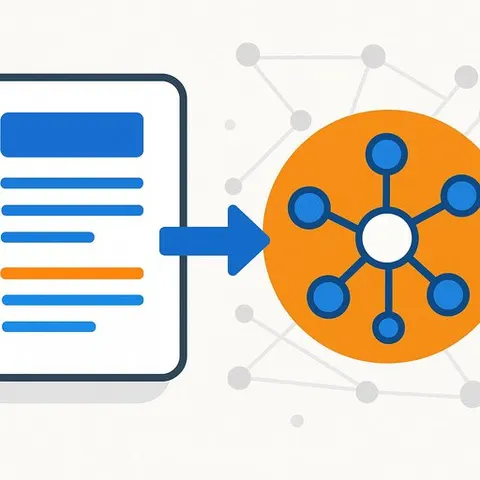
Document Format Built for AI Agents Cuts Token Usage by 95%
A new file format designed specifically for how AI agents consume information cuts token usage dramatically while maintaining accuracy. OBJECTGRAPH (.og) structures documents as knowledge graphs instead of linear text, eliminating inefficiencies that plague current document formats.
The problem is straightforward: documents designed for human readers don't match how autonomous AI agents work. Agents retrieve specific information rather than reading linearly. This mismatch forces wasteful token consumption, compounds state across requests, and broadcasts unnecessary information in multi-agent systems.
From Linear Text to Structured Graphs
OBJECTGRAPH reimagines documents as typed, directed knowledge graphs optimized for agent traversal. The format remains a strict superset of Markdown, meaning existing .md files work without modification and no new infrastructure is required beyond a simple query protocol.
The format includes built-in primitives for agent interaction: Progressive Disclosure Models, Role-Scoped Access Protocols, and Executable Assertion Nodes. These elements enable agents to access only relevant information rather than scanning entire documents.
Measurable Efficiency Gains
Testing across different document types and agent tasks showed token reductions up to 95.3% while task accuracy remained statistically equivalent to baseline performance. A transpiler converted documents with 98.7% content preservation, demonstrating the format's robustness.
For product teams building generative AI and LLM systems, the efficiency gains matter directly. Fewer tokens mean faster response times and lower infrastructure costs at scale.
AI for Product Development increasingly depends on how agents interact with knowledge. Document format choices affect system performance as much as model selection does.