
AI news ·
Next UK prime minister must build tech sovereignty as US limits AI access
The next UK prime minister inherits a frozen £150 billion US tech investment deal. This follows new American limits on frontier AI models.
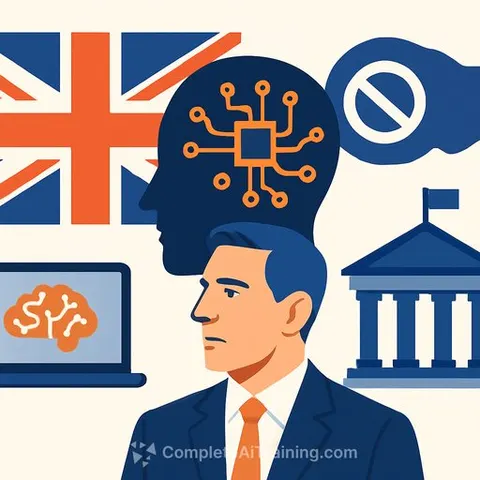
Keir Starmer's resignation on 22 June sets the stage for Andy Burnham to enter Downing Street within weeks, at a moment when the UK's technology dependencies on the United States are facing their most serious test in decades. The next prime minister will inherit a US-UK tech relationship showing visible cracks - including a major investment deal now reportedly on ice and new American restrictions on frontier AI model access.
Two decades of Washington dependence
British tech policy has leaned heavily on the special relationship with Washington for twenty years. The UK's dependencies on US technology run deep, spanning cloud infrastructure, frontier models, and defence systems. In return, successive governments have expected guaranteed market access, intelligence-sharing arrangements, and a seat at the top table for the UK's AI governance and research institutions.
US technology companies have invested in the UK for decades. The relationship has shaped procurement decisions across Whitehall, from health data platforms to border security systems. For civil servants and policy professionals, understanding how to navigate this shifting landscape requires more than instinct - structured AI Learning Path for Policy Makers resources now exist to bridge the gap between technical dependency and strategic decision-making.
A deal on ice
The Tech Prosperity Deal, signed during President Trump's state visit, announced £150 billion in future US investment into the UK. It was presented as a high-water mark of bilateral cooperation. That deal is now, reportedly, on ice.
The freeze comes as European governments grow increasingly uneasy about the reliability of US technology commitments. The administration has demonstrated a willingness to use access as a lever - and the UK is directly in the path of that shift.
AI access restrictions raise alarms
European alarm intensified after the US imposed temporary limits on access to the latest AI models. The restrictions affected Anthropic's Mythos 5 and OpenAI's GPT 5.6, two of the most advanced systems available. The decision was made at the sole discretion of the Oval Office, with no prior consultation or published criteria.
The implications reach beyond corporate contracts. Government departments increasingly rely on these models for policy analysis, scenario planning, and operational efficiency. For teams working on AI for Government initiatives, the restrictions signal that access to critical infrastructure cannot be taken for granted.
Why this matters for Government professionals
The next prime minister faces a structural question: whether to double down on a strained US relationship or accelerate efforts to build sovereign capability and diversify alliances. For government professionals, the immediate practical concern is supply chain continuity. The models and cloud services underpinning departmental workflows are subject to political decisions made in Washington, not London. Contingency planning - including evaluating non-US alternatives and strengthening domestic procurement frameworks - moves from theoretical exercise to operational necessity.