
AI news ·
NHS must fix fragmented data systems and tackle bias to unlock AI's potential in healthcare
The NHS can't tap AI's potential until its fragmented data systems connect. Inconsistent data across 42 care systems, missing regulations, and biased training sets are the main obstacles.
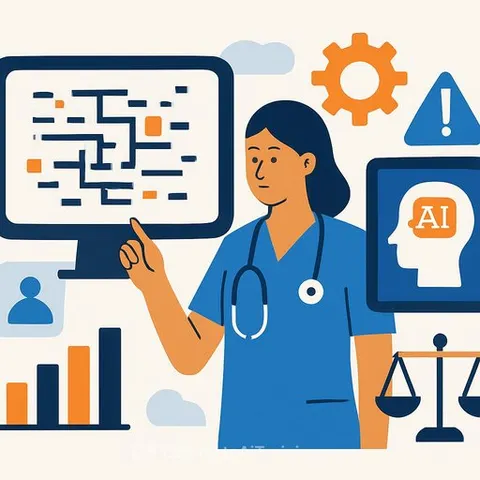
UK Healthcare Needs Data Integration to Unlock AI's Potential
AI can improve surgical precision, accelerate drug discovery, and personalise patient care. But the NHS won't realise these benefits unless it solves a fundamental problem: fragmented data systems that can't talk to each other.
That's the core challenge facing government officials tasked with embedding AI into healthcare delivery. The technology itself works. The infrastructure doesn't.
What the Government's Health Plan Requires
The UK Government's 10-Year Health Plan depends on three shifts: moving care from hospitals to communities, replacing analogue processes with digital ones, and focusing on prevention rather than treating illness. AI supports all three, but only if data flows freely across the NHS.
The NHS App could become a "digital health wallet" where patients store and control their health information. That requires interoperability. So does genomics research-where AI algorithms analyse DNA patterns to catch rare diseases and cancers early. Pharmaceutical companies could then use these insights to tailor medicines to specific patient groups.
The NHS Federated Data Platform is attempting to address this by consolidating fragmented data across the system and building analysis capabilities. But 42 integrated care systems in England each manage data differently, creating inconsistency and preventing effective data sharing.
Regulatory Gaps Are Slowing Progress
The UK currently lacks specific regulations on AI, which creates uncertainty for healthcare organisations implementing new tools. Government policy must shift from barrier to enabler-allowing patients greater control over their data and permitting healthcare providers to share anonymised datasets across borders for research.
The UK should explore bilateral data adequacy frameworks with international partners and establish knowledge-sharing agreements to strengthen interoperability between healthcare systems. Without these, the UK risks falling behind in drug development and medical innovation.
Bias in AI Training Data Poses Real Risks
Data bias remains the biggest safeguard concern. If AI training sets are flawed, algorithms can discriminate against specific demographics-reinforcing existing health inequalities.
The digital divide drives this problem. Poorer communities often have lower-grade technology, weak internet connectivity, and limited digital literacy. People from some minority ethnic groups are underrepresented in public datasets as a result, meaning AI models trained on these datasets may perform worse for them.
Government must identify how to reach these populations and ensure they have adequate access to GPs and digital infrastructure so their data enters training sets. Data agreements for AI healthcare projects should include guardrails against bias.
What Government Should Do Now
Establish AI regulations urgently. Upgrade NHS back-end systems to ensure models train on high-quality, ethically sourced data. Adapt procurement practices so the health service can embed emerging technologies within service provision.
Government procurement and regulation have historically acted as barriers to health tech adoption. They need to become accelerators instead.
Learn more about AI for Healthcare and AI for Government.