"No AI Used" Becomes a Sales Signal: UK Firm Pushes for a Global Standard at EFM
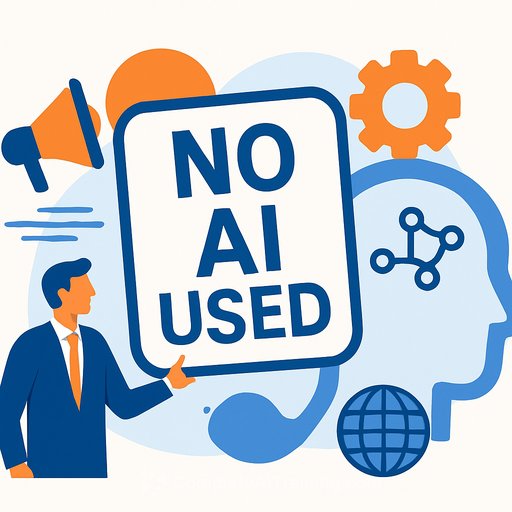
At the European Film Market, UK sales firm The Mise En Scene Company (Msc) is rolling out a "No AI Used" label across its marketing and calling for a global disclosure standard. The move was inspired by a recent end-credit note from A24 on the horror film Heretic stating no generative AI was used.
Msc's slate includes Billy Knight, starring Al Pacino and Charlie Heaton, and Forge with Kelly Marie Tran and Andie Ju. The company's message is clear: they're not anti-tech-they want a reliable way to signal human authorship as AI-produced content floods creative fields.
Why this matters for sales teams
For marketing teams, labels like "No AI Used" are trust signals - simple, verifiable claims that shorten evaluation cycles and reduce perceived risk. See AI for Marketing for strategies on turning disclosure into a marketing advantage.
Buyers are starting to ask where and how AI is used. Clear disclosure helps you control the narrative, set expectations, and defend price.
Translate the move into sales wins
- Positioning: Offer two clear value props-"No AI Used" for authenticity and rights confidence, or "AI-Assisted, Human-Verified" for speed and cost efficiency.
- Proof: Document your process. Keep receipts-drafts, edit logs, tool lists-so your claims aren't just marketing copy.
- Risk management: Add contract language on AI use, data sources, and warranties for IP and likeness. Reduce buyer anxiety before legal reviews stall the deal.
- Objection handling: Prep concise answers to "Why no AI?" and "Where is AI used?" Tie each answer to outcomes buyers care about: quality, compliance, deliverability, and cost.
- Pricing logic: If you sell human-made as a premium, say why (craft, brand fit, union compliance). If you sell AI-assisted speed, guarantee review standards.
- Testing: A/B test disclosure badges on landing pages and one-sheets. Track qualified leads, close rates, and refund/returns to see if the signal moves deals.
What a useful industry standard could include
- Clear definitions: What counts as "No AI Used"? Writing, editing, VFX, music, captions-define the scope.
- Disclosure tiers: "No AI Used," "AI-Assisted, Human-Directed," "AI-Generated, Human-Reviewed." Keep it simple and consistent.
- Verification: Self-attestation plus optional third-party review. Encourage audit trails without forcing heavy cost upfront.
- Metadata and badges: Machine-readable credentials using open specs like C2PA Content Credentials so platforms and buyers can verify claims.
- Remedies: If claims are false, specify corrections and make-good terms. Protects buyers and deters sloppy marketing.
How to implement your own credibility label this quarter
- Scope it: Decide where AI is permitted or excluded across your pipeline. Put it in a one-page policy you can share.
- Audit it: Map tools used at each step. Keep a changelog so sales can confidently answer, "How was this made?"
- Publish it: Add a brief disclosure block in decks, product pages, and trailers. Avoid vague language-be exact.
- Verify it: Where possible, attach content credentials and link to a public verification page.
- Train it: Give your reps a tight FAQ and two talk tracks-authenticity-first and efficiency-first-so they can match buyer preference.
Film and media context
Rights buyers at markets like EFM are under pressure to avoid IP and likeness risks while backing work that feels distinctly human. A "No AI Used" badge gives them a fast filter and a talking point with internal stakeholders.
Expect more end-credit notes and catalog flags, similar to the Heretic example. As the signal spreads, the absence of any disclosure may become a negative cue.
Msc's current slate (and why that helps the signal land)
Msc is applying the label while selling titles with recognizable talent: Billy Knight (Al Pacino, Charlie Heaton) and Forge (Kelly Marie Tran, Andie Ju). Star power plus clear authorship claims builds confidence for international buyers deciding quickly during market weeks.
Checklist for your next pitch deck
- One slide: Production and AI-use policy (plain language, bullet points).
- Badge: "No AI Used" or "AI-Assisted, Human-Verified" on the title page and footer.
- Evidence: Link to a short verification page and sample process docs.
- Legal appendix: Warranty language and rights clearances summary.
- Case study: Conversion or QA metrics from a prior project where disclosure improved outcomes.
Upskill your team on AI disclosures
If your buyers are asking tougher AI questions, equip reps and marketers now. Curated training by job role can speed that up: AI courses by job. Also review role-specific guidance like AI for PR & Communications to sharpen messaging and stakeholder-facing answers.
The takeaway: disclosure is becoming a feature, not a footnote. Define your stance, back it with proof, and turn it into a sales advantage before buyers start requiring it by default.
Your membership also unlocks: