ChatGPT hasn't been banned from giving legal or medical advice - but you still shouldn't trust it blindly
There's been confusion online about a supposed ban on legal and medical advice from ChatGPT. That's not what happened.
Karan Singhal, OpenAI's Head of Health AI, clarified that ChatGPT can still discuss legal and health topics. The rule is about how users employ the tool: you shouldn't use it to deliver individualized advice that requires a license without a licensed professional involved. That policy has been around; it was just restated and surfaced more clearly.
In short: ChatGPT will talk. You, as the licensed professional, are responsible for what makes it into client work or the court record.
What this means for legal professionals
Think of ChatGPT as a sharp intern with zero bar card and a habit of sounding confident. It can summarize statutes, draft outlines, rephrase, compare rules across jurisdictions, and explain dense language. It cannot be your authority of record.
Your ethical and procedural obligations don't change because a model is helpful. You still need primary sources, cite checks, and competent supervision of any AI-assisted work.
Why blind trust is risky
- Hallucinations happen: The model can invent cases, quotes, and citations that look plausible but don't exist.
- Omission bias: It often gives the most agreeable answer and skips inconvenient nuances, exceptions, or adverse authority.
- Variable specificity: Without grounding, the model may overgeneralize across jurisdictions and timeframes.
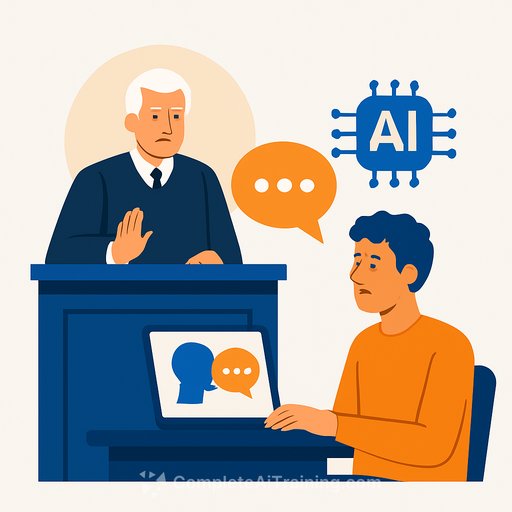
Courts are losing patience with AI-inflated filings. Your signature still certifies your work. See the duty under FRCP Rule 11 and technology competence under ABA Model Rule 1.1.
How to make ChatGPT useful without getting burned
Use it for understanding, not authority
- Ask it to explain a statute, rule, or opinion you already have in front of you.
- Have it propose issue lists, arguments, counterarguments, or deposition question angles - then you validate each point.
- Draft first-pass emails, cover letters, or clause variations to speed iteration.
Make it cite or stay grounded
- Ask for sources every time. Then click through and verify. If it can't cite primary law or a known secondary source, don't use it.
- Provide the source yourself. Paste the relevant statute, rule, or case excerpt and tell it to base answers strictly on that text.
- Spot-check citations. Confirm in official reporters, court sites, or trusted databases before anything leaves your desk.
A courtroom-safe workflow
- Prompt for an outline or argument tree, not a finished brief.
- Gather primary sources that support or contradict each branch.
- Rewrite with citations you have personally verified.
- Run a final cite check and jurisdiction review. Then read it out loud. If it sounds too smooth to be true, it usually is.
Guard client confidentiality
- Don't paste privileged facts, PII, or sensitive documents into public tools.
- Use redactions or hypotheticals when ideating.
- If your firm uses an enterprise instance, confirm data retention, access controls, and your client's consent obligations.
Prompts that reduce risk
- "Here is the text of [Rule/Statute/Case Excerpt]. Summarize the key elements. Only use this text. If unsure, say so."
- "List the strongest counterarguments to the position below. Cite only to sources I pasted. Flag ambiguities."
- "Draft a neutral issue list for this fact pattern. No recommendations. Note missing facts."
How to check if the model is "lying"
- Ask: "Cite your sources and explain how each supports the conclusion." Then verify each link or citation.
- Cross-check against primary materials and a second independent source.
- Force a confidence check: "List uncertainties, assumptions, and what would change your answer."
- Flip the burden: "Argue the other side and identify the most damaging authority."
Bottom line
OpenAI didn't ban legal or medical discussions. The responsibility sits with the user - you - to ensure a licensed professional reviews anything that could affect someone's rights or health. Use ChatGPT to think faster, not to skip thinking.
If you want structured, practical ways to integrate AI into your legal workflow without tripping over ethics or accuracy, explore these curated resources: AI courses by job and ChatGPT-focused training.
Your membership also unlocks: