
AI news ·
Nobel laureate John Jumper leaves Google DeepMind for Anthropic
Nobel Prize winner and AlphaFold co-creator John Jumper has left Google DeepMind after nearly nine years to join Anthropic. His move strips Google of a key architect behind the system that predicted over 200 million protein structures.
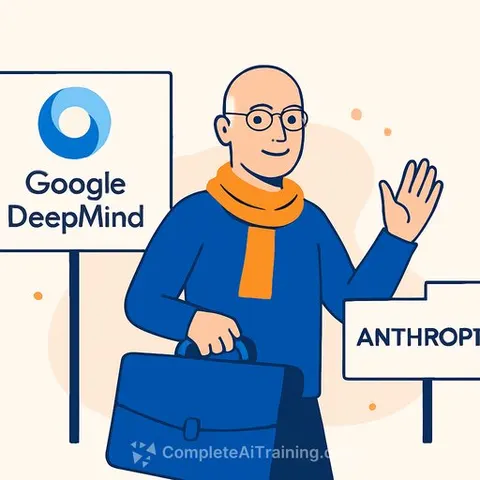
Anthropic has hired Nobel Prize-winning scientist John Jumper, one of the most respected researchers in artificial intelligence, as he departs Google DeepMind after nearly nine years. The move removes a key architect behind the AlphaFold protein-prediction system from Google's ranks and intensifies the industry-wide battle for elite AI talent.
Jumper confirmed the move on June 19 in a post on X, saying he had decided to leave Google DeepMind and join Anthropic. At DeepMind, he served as Vice President and Engineering Fellow, according to his LinkedIn profile. His departure follows just days after Noam Shazeer, a vice president of engineering and co-lead of Google's Gemini AI models, left to join OpenAI, according to Reuters.
A key figure behind AlphaFold
Jumper is best known as the co-creator of AlphaFold, the AI system that transformed biological research by accurately predicting protein structures. The technology has predicted more than 200 million protein structures, compressing years of laboratory work into computational predictions. His contributions earned him a share of the 2024 Nobel Prize alongside Google DeepMind CEO Demis Hassabis.
Following Jumper's announcement, Hassabis said AlphaFold had "changed the world" and demonstrated how AI could advance science and medicine. Jumper described DeepMind as a "special place" and expressed interest in the discoveries the organization will continue to make.
Latest sign of a fierce talent battle
Companies including Alphabet, Meta, OpenAI, and Anthropic are competing aggressively for a limited pool of elite researchers. D.A. Davidson analyst Gil Luria told Reuters the demand for top AI talent has become so intense that frontier AI laboratories are willing to do almost anything to recruit leading researchers. Luria said startups such as Anthropic and OpenAI may hold an advantage because they can offer a more focused environment with less bureaucracy than larger technology companies.
The movement of talent is increasingly viewed as a critical factor in determining which organizations emerge as leaders in the next phase of AI development. For Anthropic, securing one of the architects behind AlphaFold strengthens its scientific credentials. For Google DeepMind, the departure serves as a reminder that even the most established AI labs face pressure in retaining top researchers. Anthropic has not publicly disclosed Jumper's role at the company.
For research scientists watching these shifts, the deeper signal is clear: the competition for AI leadership is becoming a competition for people. The ability to attract and retain world-class scientific talent now influences not only research output but broader competitive positioning. Those building careers at the intersection of AI for Science & Research are operating in one of the most contested hiring markets in technology.
Why this matters for science and research professionals
The flow of senior researchers between frontier labs shapes which scientific problems get solved and how quickly. When a figure like Jumper moves, it signals where the next generation of tools for drug discovery, materials science, and biological research may emerge. For research scientists building AI skills, following these talent shifts helps identify which organizations are investing most heavily in scientific applications - and which AI Learning Path for Research Scientists are likely to align with where the field is heading.