
AI news ·
Nonprofit RAISE US launches with $500 million to retrain workers for AI
Backed by $500 million, RAISE US will retrain American workers for the AI economy. The nonprofit partners with governors to test new education and unemployment programs.
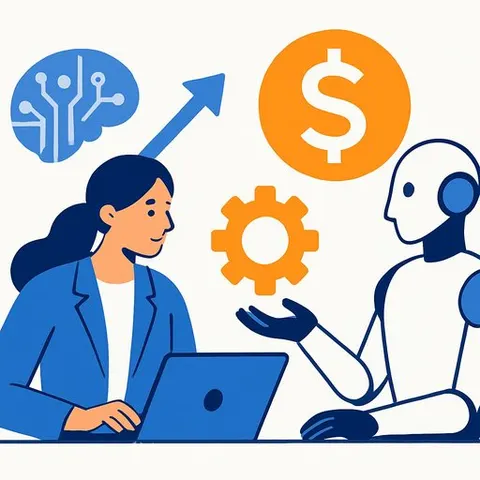
RAISE US, a new nonprofit backed by $500 million in initial funding, is partnering with corporate giants and a bipartisan group of governors to retrain American workers for an economy reshaped by artificial intelligence - and to deter mass layoffs before they happen.
The organization, led by former governors Gina Raimondo (D-R.I.) and Eric Holcomb (R-Ind.), has secured commitments from corporate donors including Anthropic, OpenAI, Amazon, Microsoft, Bank of America, General Motors and Eli Lilly. Its first-year pilots will test ideas such as expanding "service year" healthcare and education opportunities for young people and overhauling unemployment insurance to help laid-off workers start small businesses using AI tools.
A bipartisan coalition with corporate backing
The group's early partner list spans the political spectrum. Maryland Gov. Wes Moore, a rising Democratic star, and Arkansas Gov. Sarah Huckabee Sanders, a Trump ally, are both on board. Utah Gov. Spencer Cox (R) and Connecticut Gov. Ned Lamont (D) have also signed on. "Part of the reason we're working with governors is because they can move faster," Raimondo said.
RAISE US has assembled a board that mixes labor, finance and technology leaders. AFL-CIO president Liz Shuler, Blackstone CEO Stephen Schwarzman, philanthropist Laurene Powell Jobs, former Commerce Secretary Penny Pritzker and former House Speaker Paul Ryan all hold seats. Former Deloitte executive Janet Foutty will serve as president of corporate partnerships.
The formation comes as major AI company leaders have tempered earlier predictions about rapid white-collar job destruction. This year, OpenAI's Sam Altman and Anthropic's Dario Amodei walked back sweeping forecasts, but Raimondo sees the nonprofit as a fast-moving test ground for ideas that could inform federal policy later. "If there is a period of concentrated job loss, I do expect the federal government will have to intervene, and my greatest hope at that time, however many years away that is, is that when they do that, they'll look to our work," she said.
Testing new approaches with pilot programs
The pilots will be funded by RAISE US and participating states, not directly by the corporate donors funding the overall nonprofit. Raimondo and Holcomb argue that existing institutions haven't kept pace. Schools aren't producing workers with the skills employers need, and unemployment insurance wasn't built for an economy where career switching becomes routine.
RAISE US plans to spend its initial $500 million over three to four years while raising more toward a $1 billion target. Holcomb acknowledged that even that sum may fall short as the effort expands to additional states. "We can scale up as well over time, but I'll just be frank, a billion dollars wouldn't be enough to affect the need that is out there," he said. "That just shows you how big the issue is."
The group avoids the AI tax debate
While RAISE US will operate an internal policy lab that doesn't take corporate money, it has no intention of wading into the contentious fight over whether workers should share directly in AI-driven profits through mechanisms like taxes on industry earnings, public wealth funds or government equity stakes. Versions of those ideas have attracted support from Sen. Bernie Sanders, OpenAI and former President Trump.
"We're not going to be deeply engaged in the debate around a federal tax overhaul," Raimondo said. "I personally don't love the idea of the government owning big stakes in companies. It lends itself to corruption. It's frankly the definition of socialism." She added that Congress should find its own ways to spread AI's gains.
Why this matters for government and IT professionals
For policymakers and public-sector technology leaders, RAISE US offers a real-world testing ground for workforce interventions that could influence legislation and state programs. The bipartisan governor coalition signals that AI workforce disruption isn't a partisan flashpoint - it's a management challenge governments are trying to get ahead of. Professionals in AI Learning Path for Policy Makers roles will likely see the pilot results, particularly around unemployment insurance reform and service-year programs, shape future policy discussions.
IT and development professionals should watch how AI for Government initiatives translate into demand for new skills and support systems. If these pilots succeed, they could create templates for retraining programs that overlap with private-sector upskilling efforts, changing the landscape of employer expectations and public funding for technical education.