
AI news ·
North Carolina treasurer's office adopts AI tools after pilot program shows 10% productivity gain
North Carolina's Treasurer's Office is rolling out AI tools across daily operations after a 12-week pilot showed a 10% productivity gain. The office now holds 150+ licenses for generative AI products, including OpenAI's Copilot and GitHub.
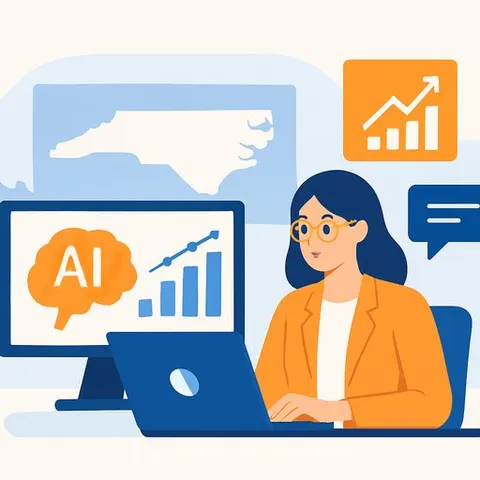
North Carolina Treasurer's Office Deploys AI Across Daily Operations
The North Carolina Treasurer's Office will integrate artificial intelligence into its operations after a 12-week pilot program showed a 10% productivity increase. The decision follows testing of tools including OpenAI's Copilot and GitHub, with the department now holding more than 150 licenses for generative AI products.
Treasurer Brad Briner said the move reflects fiscal responsibility. "We have a moral obligation to the taxpayer to use their money wisely. That means improving the efficiency of everything we do as state government," he wrote in an April press release.
Where AI is Making the Biggest Difference
The unclaimed property division offers a concrete example. Staff previously spent significant time identifying contacts-CFOs, billing managers-to reconnect owners with dormant bank accounts, uncashed checks, and other lost assets. AI now handles those searches almost instantly.
Eric Naisbitt, head of staff at the office, said the tool lets employees focus on work they value. "For local governments they really want to do the analytical work, they don't want to do emails, they don't want to do phone calls, they don't want to do scheduling," he said.
Security Built Into the System
The department designed its AI sandbox to prevent sensitive data from entering larger generative AI models. No personal or private information is fed into the system for the models to learn from, Naisbitt said.
Lawrence Koffa, the office's chief information officer, said protecting data is non-negotiable. "It's my team's responsibility to make sure private and personal information never leaks from our department. Safety and security are paramount," he said.
All employees completed ethical use training before accessing the tools.
Staffing Remains a Priority
Naisbitt pushed back against the idea that AI means workforce reduction. "We've hired and we have a group of really good staff on hand. And we want them to get better at their jobs," he said. "This is not a way to replace the human element of this, but rather enhance the human element of this."
The Broader Government Question
Lee Rainie, director of the Imagining the Digital Future Center at Elon University, said the treasurer's office move signals a larger shift in how government uses technology. But success depends on maintaining public trust.
"There are benefits at stake. There are policies at stake. There are general issues about trust," Rainie said. He noted that Americans' confidence in government has eroded, making the stakes higher when agencies adopt new tools.
Protecting citizen data while improving service quality is essential. "You're a citizen, right? And you pay taxes. You vote. You have a stake in the policies that are being created by government agencies because they're supposed to act in the public good," Rainie said.
Learn more about AI for Government and AI Productivity Courses for your role.