
AI news ·
North Dakota education department uses grant to test artificial intelligence reading tutor in rural schools
North Dakota is piloting an AI reading tutor in rural schools to address staffing gaps. The program targets the 90% of campuses lacking staff for one-on-one reading practice.
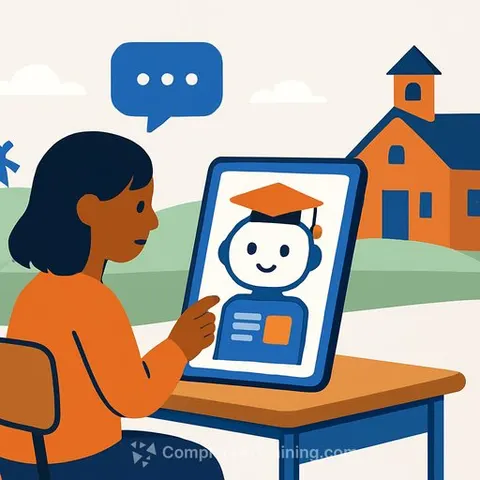
North Dakota's Department of Public Instruction (DPI) has secured an education innovation grant to pilot an AI-based reading tutor in rural schools, where 90% of the state's campuses lack the staffing for sustained one-on-one fluency practice. The Amira Learning Platform will serve as the core tool, offering real-time feedback that mimics the guidance of a human reading coach.
Brenda Ehrmantraut, assistant director in DPI's Office of Academic Support, described the system as a direct response to the staffing constraints small districts face. "It can listen to them one-on-one. Then it can provide feedback, and specific corrections to their reading, as if they were reading one-to-one with an adult," she said.
How the AI reading tutor works
The platform uses speech recognition to assess oral reading, flagging errors and offering targeted corrections the moment a student stumbles. Because the feedback is immediate, students get the repetition and reinforcement that typically requires a dedicated adult - a resource rural schools often cannot provide. The tool is part of a growing set of AI for Education applications that deliver personalized instruction without requiring a second teacher in the room.
A focus on rural schools
DPI structured the pilot around the state's most resource-limited buildings. Ehrmantraut noted that small schools simply have fewer adults available to support reading practice. "Ninety percent of our schools in North Dakota are rural schools. They're small, with limited resources, especially with the number of adults available to support any instruction, or additional instruction. This is a way to really enhance what they can provide to their students within that setting."
The research component
The grant is not just about deploying software; it includes a study to measure impact. DPI is now in the planning phase for a pilot year, identifying schools, setting protocols, and recruiting teachers. The central question: does more training on the AI tool lead to better student outcomes? Ehrmantraut confirmed that the research will track whether teachers who receive more instruction on using the platform see stronger reading gains from their students.
Why this matters for education professionals
For teachers and administrators in rural or understaffed settings, the North Dakota pilot offers a concrete model for using AI to fill a persistent gap - not as a replacement for educators, but as a force multiplier for one-on-one practice. The study's emphasis on teacher training underscores a practical reality: the tool's effectiveness likely hinges on how well educators are prepared to integrate it. If the data shows that targeted professional development improves outcomes, it could shape district-level decisions about AI adoption far beyond reading fluency.