Novelists are worried AI could replace them - here's what the report says and what to do next
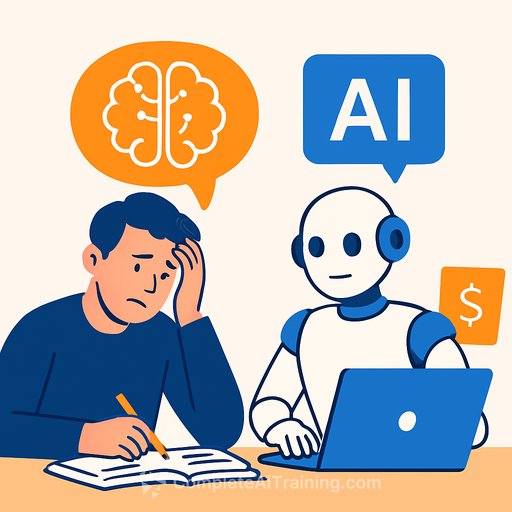
A new report shows many novelists see AI as a direct threat to their craft and income. About half believe AI could entirely replace their work.
Dr Clementine Collett, of the Minderoo Centre for Technology & Democracy at the University of Cambridge, surveyed 332 authors. "There is widespread concern from novelists that generative AI trained on vast amounts of fiction will undermine the value of writing and compete with human novelists," she said.
What the research found
- About 50% think AI could fully replace their job.
- 97% are extremely negative about AI writing complete novels.
- 40% say AI has already cut income from side work that supports their writing.
- Roughly 60% say their work was used to train AI without permission or payment.
Many authors also reported finding books falsely claiming to be written by them. Dr Collett added: "Many novelists felt uncertain there will be an appetite for complex, long-form writing in years to come."
She argued for tighter rules: "Copyright law must continue to be reviewed and might need reform to further protect creatives. It is only fair that writers are asked permission and paid for use of their work."
The bigger picture
Four in five respondents still see societal benefits from AI, but they want fair use of their work and clear support from government. Prof Gina Neff, executive director of the MCTD, put it plainly: "Our creative industries are not expendable collateral damage in the race to develop AI. They are national treasures worth defending."
A government spokesperson said they're working with both the creative industries and the AI sector to advance innovation while protecting creators.
Learn more about the Minderoo Centre's research focus at University of Cambridge - MCTD, and current UK policy activity via the Department for Science, Innovation and Technology.
Practical moves for authors right now
- Add clear AI clauses to your contracts: prohibit training use without express permission and payment; define approved production uses (if any) and credit requirements.
- Register your works and keep dated drafts. If you self-publish, secure ISBNs and fill in metadata thoroughly to reduce impersonation risk.
- Monitor for fakes and unauthorized use. Set up alerts for your name, book titles, and signature phrases; report storefront scams quickly.
- Use watermarks or unique text snippets in advance reader copies to trace leaks.
- Band together. Join a union or collective to push for default opt-outs, licensing standards, and model transparency.
- Adopt AI with boundaries: use it for research, outlines, comps, or admin - keep your voice and final prose human.
- Diversify income streams: teaching, serial fiction, direct reader memberships, limited editions, rights sales.
- Document everything. If you grant any AI rights, track where, when, and for what purpose - and set expiry dates.
Using AI without losing your voice
AI can reduce busywork, but it shouldn't replace your narrative decisions. Keep the core creative moves - premise, character, scene, theme - in your hands, and treat AI outputs as disposable scaffolding, not finished pages.
If you want structured ways to work with AI tools without compromising authorship, explore curated options for writers at AI tools for copywriting or browse learning paths by job at courses by job.
What to watch next
Expect more debate on training data consent, collective licensing, credit, and revenue-sharing. Many authors reported their works were used without consent; meaningful fixes will require enforceable standards and clear routes to opt in or out.
Bottom line
Writers are right to be wary. The tech brings utility, but your craft is the value. Protect your rights, use the tools on your terms, and keep the page yours.
Your membership also unlocks: