NSW Chief Justice warns directors may lose legal protection if they blindly rely on AI
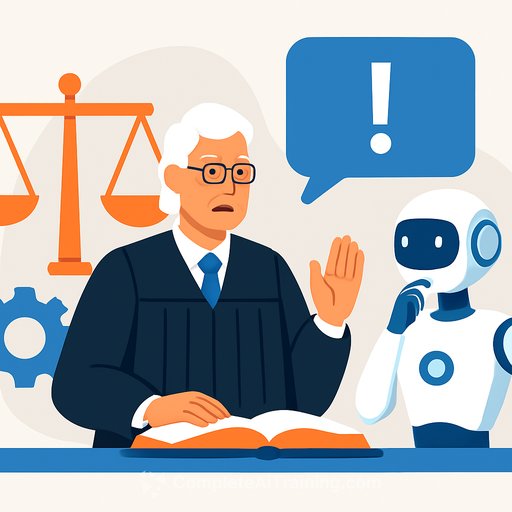
Australia's Chief Justice Andrew Bell has told company directors that their existing legal duties remain unchanged in the age of AI - but satisfying those duties is now harder, and failure to do so could strip away their traditional legal protections.
In a lecture on corporate governance, Bell said directors cannot outsource their judgment to AI systems. They must understand what the technology does, question its outputs, and maintain independent decision-making.
"Those who wish to make use of AI should do so as an aide to their own decision-making, rather than as a substitute for making an independent assessment," Bell said.
The core problem: black boxes in the boardroom
Directors face a specific risk with AI systems that operate as "black boxes" - technology with limited transparency about how it reaches conclusions. Corporate law in Australia remains technology-neutral, meaning existing director duties apply to AI use. But that neutrality works against directors when they can't explain or understand the systems they rely on.
Bell distinguished between privately developed AI platforms built for specific companies with controlled data sets and publicly available tools like ChatGPT. The latter carry greater risks around data quality, integrity, and security.
Directors are now expected to become informed about AI, understand its risks, and establish governance frameworks to manage it.
How directors are using AI - and where it goes wrong
Boards are deploying AI across multiple functions: researching peer practices, evaluating performance metrics, preparing meetings, assessing compliance risk, and informing investment decisions. Some companies have even integrated AI into board portals.
The risk emerges when directors defer to AI in ways that resemble boardroom discussion. AI outputs carry "great confidence and clarity of language," Bell said, which breeds over-reliance. Healthy boardroom debate requires conflict and challenge - but groupthink can form around deferring to the algorithm instead.
Bell cited Deep Knowledge Ventures, where the board agreed not to make investment decisions without corroboration from a machine-learning algorithm. "It is difficult to reconcile what appears essentially to be a veto power with the collective decision-making function of a healthy boardroom," he said.
Recording and transcribing meetings creates legal exposure
AI tools that record and transcribe board meetings can improve efficiency but introduce legal risks. Detailed transcripts could become discoverable in litigation, risking loss of legal privilege and discouraging frank discussion among directors.
Overly detailed minutes or complete transcripts can "stifle, chill or even freeze discussion," Bell warned. They may also be used as evidence in legal actions against the organisation.
Regulatory lag means directors face unclear rules
Australia has not changed its regulatory framework in response to AI's emergence. The Corporations Act and related legislation remain the governing standard. But Bell warned that key provisions protecting directors may not apply where AI played a prominent role in board decisions.
The pace of AI change outstrips regulators' ability to respond. Much of the technology is "apparently not even understood by scientific experts or the digital designers behind the technology," Bell said - a fact that should alarm company leaders.
What directors must do now
Directors must be disciplined and vigilant in their use of AI. That means understanding its limitations, establishing systems to mitigate risks, and educating themselves about both how they use AI and how their company uses it operationally.
A blanket ban is unnecessary. Instead, directors need a balanced AI governance strategy with secure, sanctioned platforms that embed controls. Without it, frustrated employees may resort to "shadow" AI use - unsanctioned tools that increase risks around fraud, cybersecurity, confidentiality, and national security.
Independent thought must remain at the heart of good corporate governance. Boards need independent non-executive directors who can challenge management and hold it to account.
Litigation wave likely ahead
Bell warned that litigation over AI use by corporations and directors is probable. "It will be a bitter irony that AI may itself play a significant role in formulating claims and identifying vulnerabilities leading to litigation about the use/non-use and abuse of AI," he said.
For executives and strategy leaders, the message is direct: AI is now central to corporate governance. Directors who fail to understand it, oversee it properly, or maintain independent judgment may find their legal protections weakened when disputes arise.
Learn more about AI for Executives & Strategy and AI for Legal to understand how these governance principles apply to your role.
Your membership also unlocks: