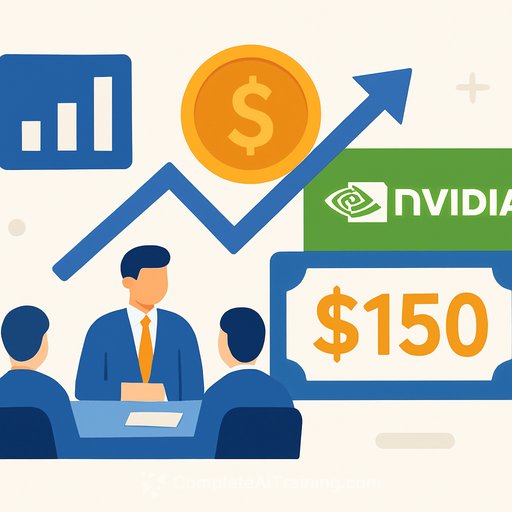
Nvidia's board authorized a $150 billion increase to its share repurchase program, lifting the total remaining authorization to $235 billion - the largest buyback expansion in the company's history. The program runs through fiscal 2028, which ends in January 2028, and the news helped push Nvidia shares 2.6% higher for the week, extending a three-week winning streak.
Micron Technology reported fourth-quarter revenue and earnings that beat analysts' expectations, driven by AI-related demand for high-bandwidth memory and data-center products. The chipmaker said it would announce a share buyback by the December deadline tied to CHIPS Act funding expiration. Despite the earnings beat, Micron's stock slipped 3.4% over the week as the market gave a muted response.
Capital returns surge amid AI infrastructure spending
Nvidia's buyback authorization now dwarfs most peers in the semiconductor sector. The company generated $60.9 billion in free cash flow over the trailing twelve months, giving it ample room to return capital while continuing to invest heavily in next-generation chip architecture. The expanded repurchase program signals confidence from the board that current cash generation rates are sustainable even as AI infrastructure spending accelerates.
Micron's planned buyback, while smaller in scale, follows a similar logic. The company is ramping production of high-bandwidth memory chips that sit alongside Nvidia GPUs in data-center clusters. "AI-driven demand for high-bandwidth memory continues to outpace supply," Micron said in its earnings release, pointing to order backlogs that extend well into 2025.
OpenAI takes on Meta in consumer AI race
OpenAI launched a new capability called "dots," which gives users agent-like assistance across tasks and workflows. The feature positions OpenAI directly against Meta's Muse assistant, which has drawn strong early feedback for its consumer-focused integrations. Both companies are racing to turn AI assistants into everyday digital products that users rely on for scheduling, research, and task completion.
The consumer AI battle has financial stakes that extend well beyond subscription revenue. Whoever dominates the assistant market gains a distribution channel for future services and a moat built on user habit. Meta's existing reach through Facebook, Instagram, and WhatsApp gives Muse a built-in advantage, but OpenAI's brand recognition in AI remains formidable.
Why this matters for finance professionals
Nvidia's buyback expansion is a direct signal about capital allocation priorities at the world's most valuable semiconductor company. For portfolio managers and analysts covering the AI supply chain, the authorization size - roughly equivalent to the market cap of Advanced Micro Devices a decade ago - reflects management's conviction in sustained free cash flow generation. Micron's more cautious approach, tying its buyback to CHIPS Act deadlines, shows how policy-driven incentives are shaping corporate finance decisions across the chip sector. Tracking where these companies deploy excess capital offers a real-time gauge of executive confidence in the AI cycle's durability.
Your membership also unlocks: