Nvidia Seeks Approval to Resume H20 GPU Sales to China
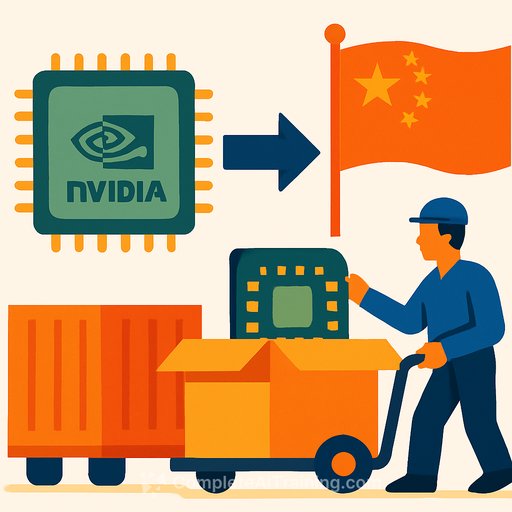
Nvidia announced on Tuesday that it has filed applications with the U.S. government to restart sales of its previously restricted H20 GPU to clients in China. The company stated, “The U.S. government has assured NVIDIA that licenses will be granted, and NVIDIA hopes to start deliveries soon.”
This marks a significant development for Nvidia, which has faced U.S. export controls affecting its business in China. In April, the U.S. government required Nvidia to obtain a license before selling the H20 chips to China, effectively halting sales. Notably, the H20 was engineered to bypass earlier export restrictions targeting Beijing.
Background on Export Controls and Nvidia’s Response
Nvidia CEO Jensen Huang has actively lobbied against the export restrictions, arguing they limit U.S. technology leadership. Huang noted in May that the restrictions had cut Nvidia’s China market share by nearly half. The company views the potential license approval as a major step toward regaining its position in China’s AI chip market.
The change in policy appears connected to a recent meeting between Huang and U.S. President Donald Trump, where Huang reaffirmed Nvidia’s support for American job creation and efforts to lead globally in AI technology.
Trade Talks and New Product Announcements
Last month, the U.S. and China reached a preliminary trade agreement easing certain export controls, including rare-earth materials and technology products. Nvidia also introduced a new GPU, the RTX PRO, described as fully compliant and suited for smart factories and logistics. It remains unclear if the RTX PRO specifically meets export guidelines for China.
Reports suggested Nvidia was developing a less advanced AI chip tailored for the Chinese market. However, the possible resumption of H20 shipments to China has surprised industry analysts.
Industry Insights and Market Impact
- Ray Wang, research director at Futurum Group, called lifting the H20 ban a “significant and positive development” that will reinforce Nvidia’s leadership in China.
- He added that resuming H20 deliveries alongside new export-compliant AI chips could drive fresh growth for Nvidia in upcoming quarters.
Nvidia shares responded positively, rising 4.5% on Robinhood shortly after the announcement.
Engagement in China and Market Competition
Nvidia confirmed that CEO Jensen Huang is currently in China, meeting with government and industry officials to discuss AI advances and safety. When export controls began, some experts anticipated local Chinese alternatives, such as Huawei, would benefit. While China’s AI chip sector is progressing, it still lags behind Nvidia and major foundries like Taiwan Semiconductor Manufacturing Co.
Louise Loo, lead economist for China at Oxford Economics, commented that allowing Nvidia’s H20 chips back into China would give local manufacturers more time to develop indigenous technology, as Nvidia chips remain preferred by many Chinese manufacturers.
What This Means for Stakeholders
- For government officials, this development signals a potential easing of U.S.-China tech tensions and emphasizes the role of licensing in export control policy.
- For sales professionals, resuming H20 shipments opens opportunities to rebuild client relationships and expand market penetration in China.
- For technology strategists, the move highlights the importance of compliance and adaptation in global supply chains.
To stay updated on AI technologies and training relevant to your role, explore resources like Complete AI Training's latest courses.
Your membership also unlocks: