
AI news ·
NYU Tisch workshop explores how AI fits into visual storytelling workflows
Former Google, Apple, and Meta engineer David Poyner argues AI doesn't automate creativity-it removes friction between idea and execution. His NYU Tisch workshop runs May 19-June 25.
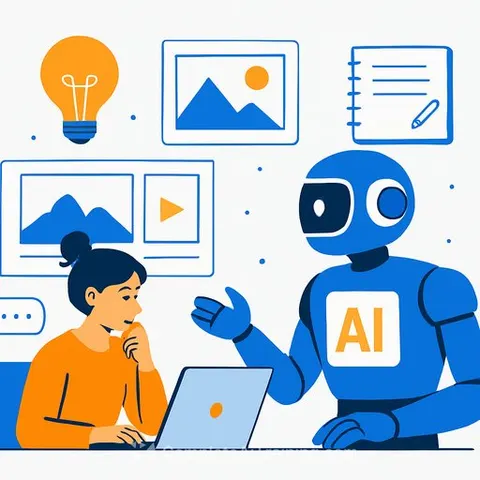
AI Won't Replace Your Creativity-It'll Remove the Blockers
Professor David Poyner has spent years building creative tools at Google, Apple, and Meta. Now he's teaching artists how to actually use AI in their work. His core argument is simple: AI doesn't automate creativity. It removes the friction between idea and execution.
Poyner runs the AI for Visual Storytelling workshop at NYU's Tisch Martin Scorsese Virtual Production Center, starting May 19. The course runs through June 25 on Tuesday and Thursday mornings, designed for artists, filmmakers, and creative technologists who want to integrate these tools into real workflows.
The Misconception
Most creatives worry AI will replace them. Poyner sees the opposite. "The goal isn't to replace humans as creatives; it's to remove the creative blockers during the process of making art," he said.
AI works across the entire pipeline. Pre-production benefits from concept generation. Production speeds up with asset creation and visualization. Post-production gains efficiency through editing, color grading, and refinement. Each stage gets faster, but the human decisions stay central.
What Actually Changes
The real skill isn't learning to prompt an AI system. It's learning to direct one. Creatives need to understand the difference between language models and diffusion models, spot generic output, and apply their own vision on top of what the tool produces.
This shift-from passive user to active director-is what preserves authorship. An artist who can't critique and refine AI output hasn't gained much. An artist who can is working with a new collaborator.
Boundaries Get Blurry
AI lets illustrators 3D model and animate. It lets animators write scripts and produce films. It lets producers pre-visualize their own work. These aren't small efficiency gains. They're category shifts.
"AI allows creatives to create more and achieve more with less," Poyner said. Work that once required specialized teams or months of timeline can now be explored iteratively by a single person.
For Poyner personally, this has changed everything. "If there is a new tool or technology I want to apply to my creative vision, AI allows me to do so."
How to Start
Poyner's advice to intimidated creatives: don't try to master everything. Find the right use case for your work first. Then use AI to improve that specific part of your process.
AI isn't going away. Creatives who want to stay current need to engage with it. But engagement doesn't mean becoming a technologist. It means understanding where these tools fit into what you already do.
The Workshop
AI for Visual Storytelling
May 19 - June 25, 2026
Tuesdays & Thursdays, 10:00 AM - 1:00 PM EST (Online)
The course is hands-on. Participants experiment with tools, develop their own projects, and think critically about AI's role in contemporary storytelling. More information is available at bit.ly/vpworkshops.
For creatives looking to build these skills, AI Design Courses and Generative Video Courses offer structured learning paths across the creative pipeline.