
AI news ·
One in three managers who cut roles after adopting AI have had to rehire, Robert Half finds
One-third of managers who cut jobs after adopting AI have had to rehire, a Robert Half report found. Most workers report little career disruption, though recruitment teams face heavier workloads as candidates use AI to mass-apply.
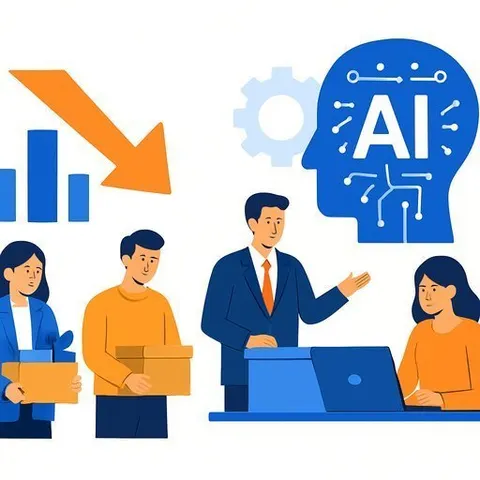
One-Third of Managers Rehire After AI Cuts, Signaling Workforce Miscalculation
Thirty-four percent of managers who cut positions after implementing AI have had to add those roles back, according to a new report from Robert Half. The finding suggests employers underestimated how much human expertise remained necessary after automation.
The trend contradicts earlier predictions of mass job displacement. OpenAI CEO Sam Altman said last week that AI has not caused the sweeping job losses some in the industry once anticipated.
In Canada, 48% of 1,500 hiring managers surveyed predict AI will increase headcount over the next two years, not shrink it. Statistics Canada data shows that among AI-adopting businesses, only 4% reported job creation while roughly 6% reported decreases-with 90% seeing no staffing effect at all.
Hiring Processes Get Stricter as Candidates Game the System
Generative AI is reshaping recruitment in a different way: candidates are using it to mass-apply to jobs and polish resumes, forcing HR teams to work harder to separate signal from noise.
Nearly 40% of HR teams now require extra in-person interviews to validate candidates. Almost half are adding skills assessments. Robert Half found that recruiting workloads have increased and time-to-hire has lengthened, straining HR departments already managing higher application volumes.
The result is a more rigorous hiring process, but one that demands more resources from teams already stretched thin.
Career Paths Shift, But Disruption Remains Limited
AI is changing how careers develop inside organizations, though most workers report minimal impact so far. Forty-seven percent of Canadian professionals said AI has had no significant effect on their career trajectory.
Among those who saw change: 25% said AI created more advancement opportunities, while another 25% said it changed the skills needed to progress. Seventeen percent said AI has created new positions they find interesting, reflecting growing demand for AI-related roles.
Half of young Canadians say AI is affecting their long-term career plans, suggesting the impact may grow as younger cohorts move through their careers.
Job Creation in the AI Sector Itself
Within the AI industry, growth is measurable. The Vector Institute reported that Ontario created 17,196 AI jobs in the year to June 2025-a 101% increase-and retained 39,327 positions. The federal government projects up to 90,000 AI-related job opportunities through targeted programs, with 250,000 positions possible by 2031.
These figures reflect demand for specialized roles, not broad workforce expansion across sectors.
What HR Leaders Should Know
- Workforce planning around AI adoption requires flexibility. Early cuts may need reversal as organizations learn what human roles remain essential.
- Recruitment teams need resources to handle increased application volume and verification workload. Budget for additional screening capacity.
- Skills gaps are real but not universal. Most workers experience gradual change rather than disruption, giving time to reskill and transition.
- AI-related roles are growing, but they remain specialized. Broad job displacement has not materialized in most sectors.
For HR managers implementing AI or evaluating its workforce impact, AI for HR Managers covers recruitment automation, hiring process changes, and workforce analytics. AI for CHROs addresses broader talent management and workforce planning strategy.