
AI news ·
OpenAI CTO Mira Murati says AI should augment humans, not replace them
OpenAI CTO Mira Murati says AI should extend human abilities, not replace jobs. She wants safety built into development from the start, not added as an afterthought.
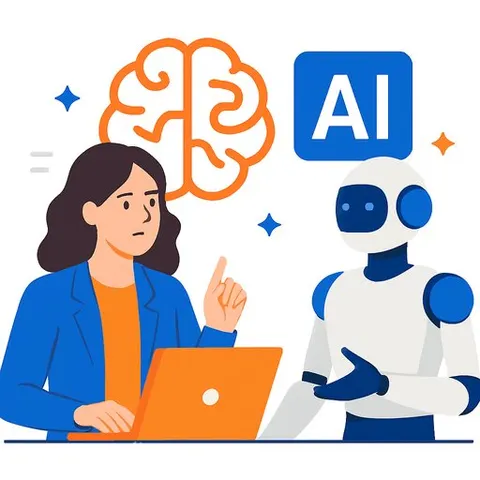
OpenAI's CTO on AI as a Tool for Human Capability, Not Replacement
Mira Murati, chief technology officer at OpenAI, said the company's AI systems should amplify human abilities rather than eliminate jobs. In a recent conversation, Murati outlined her vision for how generative AI-including products like ChatGPT and DALL-E-can enhance problem-solving and creativity across industries.
Murati joined OpenAI in 2018 after leading engineering efforts on Tesla's Model 3 program. She holds a degree in mechanical engineering from Dartmouth College and has shaped the company's technical direction and product strategy.
AI as Augmentation, Not Replacement
Murati said AI's primary function should be extending what humans can do. "We see AI as a tool that can augment human capabilities, allowing us to be more creative, more productive, and to solve problems that we couldn't before," she said.
This framing pushes back against narratives depicting AI as a threat to human work. Instead, Murati sees a partnership where AI handles routine tasks, freeing people to focus on complex challenges and creative work.
Safety Built Into Development
Safety considerations are not added later at OpenAI-they're embedded in the development process from the start. "Safety is not just a feature; it's a core part of our development process," Murati said.
OpenAI conducts rigorous safety testing and alignment research to ensure AI systems behave according to human values. Murati stressed that this work is essential for public trust and long-term benefits.
Expanding Access to Information and Education
Murati pointed to AI's potential to democratize knowledge globally. AI-powered tools can translate languages, explain complex concepts, and provide personalized learning at scale-benefits that could reach underserved communities and developing regions.
This access could shift who participates in knowledge-based work. People without expensive training or geographic proximity to educational institutions could gain skills and opportunities previously out of reach.
The Road Ahead
Murati acknowledged that AI development moves quickly, creating uncertainty about outcomes. She called for dialogue between policymakers, researchers, and the public to manage risks while capturing benefits.
Her outlook balances optimism with caution. With intentional safety work and human-centered design, she said, AI can drive progress without displacing the people it's meant to serve.
Learn more: Explore Generative AI and LLM concepts or dive into OpenAI Courses to understand the technology behind these systems.