
AI news ·
OpenAI model solves 80-year-old combinatorics problem with proof verified by mathematicians
OpenAI's reasoning model solved an 80-year-old combinatorics problem, with professional mathematicians confirming the proof is valid. It's the first clear sign AI can produce original mathematical insights, not just process existing work.
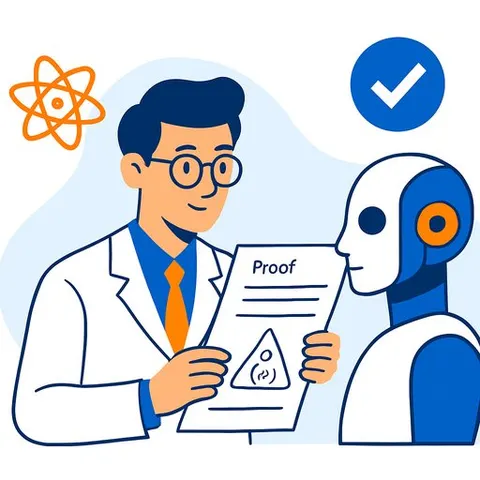
OpenAI's AI Model Solves 80-Year-Old Math Problem
OpenAI's latest reasoning model has solved a combinatorics problem that mathematicians have been unable to crack for nearly 80 years. Independent verification by professional mathematicians confirmed the proof is sound.
The problem concerns patterns, arrangements and structures within combinatorics-a branch of mathematics that has resisted solution despite decades of work by specialists in the field.
How the AI Approached the Problem
Unlike conventional AI systems that predict text, OpenAI's reasoning models work through problems step by step. The system examined multiple mathematical possibilities, tested alternative approaches, rejected unsuccessful lines of reasoning, and gradually constructed a logical argument that led to the proof.
Researchers said the process resembled how human mathematicians tackle difficult research questions-exploring multiple pathways before reaching a solution.
Verification and Limitations
Human researchers verified the result, scrutinized the logic, and confirmed the argument met established mathematical standards. The achievement does not mean AI can replace mathematicians. Generating genuinely novel mathematical reasoning has long been considered one of the most difficult challenges in artificial intelligence.
This successful proof suggests advanced reasoning models could become valuable tools for scientific discovery, helping researchers investigate complex questions across mathematics and other disciplines.
What This Means for Research
The breakthrough extends beyond the specific problem solved. It demonstrates that AI systems can contribute original insights rather than simply process existing information.
For researchers working in mathematics and related fields, AI for Science & Research courses offer structured learning on how these systems are being applied to academic research and scientific discovery.