OpenAI's Push Into Consumer Health: What Healthcare Leaders Should Prepare For
OpenAI is reportedly moving into healthcare with consumer-focused products, including a generative AI personal health assistant and a health data aggregator. The goal: help people manage their medical information, get personalized insights, and streamline access to care. There's no official comment yet from the company, but the signal is clear.
Over the past year, OpenAI has been hiring for healthcare. Nate Gross, cofounder at Doximity, joined as head of healthcare strategy, and Ashley Alexander, formerly at Instagram, came on as vice-president of health products. At the HLTH conference, Gross noted that ChatGPT sees nearly 800 million weekly active users-many already using it to ask health questions.
Why this could be different from past Big Tech attempts
Google shuttered its personal health record in 2011 due to limited adoption. Amazon ended Halo in 2023. Microsoft HealthVault didn't stick either. Historically, the value exchange for consumers wasn't strong enough to keep them engaged.
Two things changed: consumer comfort with conversational interfaces and the maturity of large language models. As Greg Yap, partner at Menlo Ventures, put it, "Consumers have historically gone to Google to ask their health questions, and it's clear they're now beginning to turn to large language models for a more conversational discovery process. I think OpenAI has a tremendous opportunity in that sector."
What an OpenAI health assistant might mean in practice
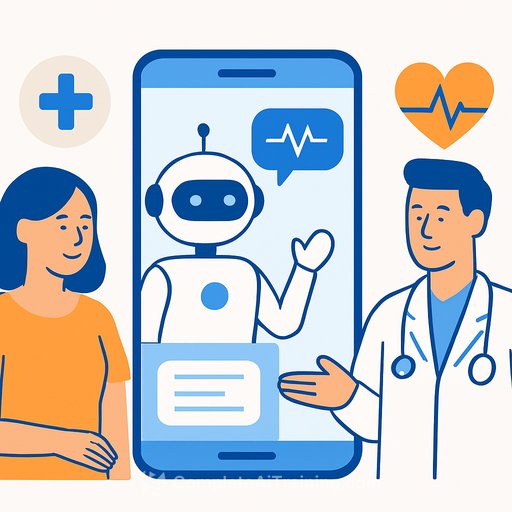
- Personal health assistant: A conversational interface to simplify symptom queries, care navigation, and follow-up questions. It won't replace clinicians, but it may influence patient expectations before and after visits.
- Health data aggregator: A centralized view of meds, labs, and records to reduce friction for patients managing multiple portals. If it gains adoption, providers may see better-prepared patients and fewer fragmented histories.
Details are still under discussion, so keep expectations grounded. The opportunity is coordination and clarity, not clinical decision-making without oversight.
Key implications for providers, plans, and digital health teams
- Data interoperability: Expect pressure to support clean FHIR-based data flows and clear reconciliations. If consumer aggregators scale, your data quality gaps will surface fast. See HL7 FHIR for standards.
- Safety and accuracy: Any assistant guiding patients needs guardrails, escalation paths, and clinician oversight. Build workflows for review, especially around meds, triage, and urgent symptoms.
- Privacy and compliance: Clarify how PHI is handled, logged, and used for model improvement. Covered entities should verify BAAs, data residency, and retention. Start with a quick read on the HIPAA Privacy and Security Rules.
- Clinical trust: Explain when the assistant is confident vs. uncertain, show sources, and make it easy to hand off to a human. Trust grows when boundaries are explicit.
- Patient equity: Test for accessibility, plain-language outputs, and multilingual support. Watch for bias in prompts and outcomes.
Lessons from earlier failures
- Value must be obvious: Consumers won't maintain another app unless it removes friction and saves time immediately.
- Integration beats isolation: Tools that live outside care pathways struggle. Close loops with EHR, messaging, and scheduling.
- Transparency matters: Clear data use, consent, and easy off-ramps. Silent data sharing will erode trust fast.
What to do in the next 90 days
- Map 3-5 high-impact use cases: pre-visit prep, post-visit summaries, medication questions, benefits navigation, chronic disease check-ins.
- Run small sandboxes with synthetic or de-identified data: measure accuracy, tone, and handoff quality. Document failure modes.
- Set procurement criteria now: PHI handling, audit logs, model update cadence, prompt/response retention, explainability, and clinician-in-the-loop requirements.
- Draft consent and disclosure language: plain English, clear opt-in/out, and data-sharing summaries patients actually read.
- Build a safety council: clinical leads, compliance, informatics, patient reps. Meet biweekly during pilots.
Vendor and model questions worth asking
- What data is stored, for how long, and for what purpose? Can we disable training on our data entirely?
- How does the assistant handle uncertainty and escalate to a human? Show examples and thresholds.
- What evals are in place for hallucinations, bias, and harmful content? How often are they run?
- How do you version models and prompts? Can we lock configurations for validated workflows?
- What's the integration path for EHR, SSO, and messaging? What's the plan if FHIR endpoints are incomplete?
Team skills to invest in
- Prompt and response evaluation: write, test, and score for clinical tone and safety.
- Data governance: PHI classification, masking, access controls, and audit practices.
- Human factors: teach-back methods, plain language, and cultural considerations in AI outputs.
If you're building internal literacy around LLMs in care settings, this curated resource can help: ChatGPT training and guides.
Bottom line
OpenAI's move into consumer health won't replace clinicians. It will reset patient expectations for clarity, speed, and access. Health organizations that prepare for safe integration-data, workflows, and oversight-will be ready when the consumer demand shows up at the front door.
Your membership also unlocks: