
AI news ·
Optibus launches AI agent purpose-built for public transit operations
Optibus Agent reduced split-shift times by up to 60% and driver turnover by 20%. The AI automates scheduling and dispatch for transit agencies in 7,000 cities.
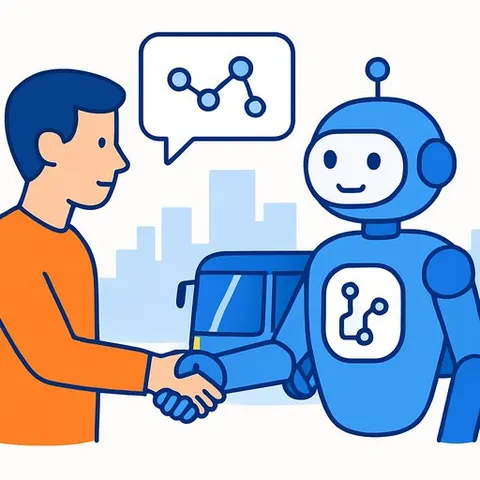
Optibus has launched an AI agent embedded directly in its platform, giving public transit agencies a purpose-built tool to automate scheduling, driver assignments, and real-time operational decisions. Called Optibus Agent, the system draws on more than a decade of work with operators across 7,000 cities and arrives as agencies face workforce shortages, budget constraints, and the complexity of fleet electrification.
How the agent works across planning, scheduling, and dispatch
The agent generates schedules that respect agency goals, labor agreements, and driver preferences, and helps planners evaluate routes and timetables against passenger demand. In driver management, it cross-references availability, certifications, overtime limits, and contractual rules to identify qualified operators for open assignments. Dispatchers can locate vehicles, see live performance metrics, and receive suggested responses to service disruptions, all while communicating with operators through the platform. Users also query operational data using natural language - for example, pulling up specific trips or reviewing scheduling outcomes without manual report building.
"Optibus is taking an AI-first approach to public transportation, and the launch of Optibus Agent marks a new era for our users," said Amos Haggiag, CEO and co-founder of Optibus. "With AI integrated into every layer of the platform, public transportation professionals can perform complex work much faster and make decisions that build far better services. It's your team's expertise, multiplied by AI."
Human oversight and how the agent expects to shift workflows
Optibus designed the agent to act as a collaborative partner, not a black-box decision engine. "Many transit agencies are understandably wary of 'black box' AI that outputs decisions without context," Haggiag said. "Optibus Agent shifts this paradigm, acting as a collaborative partner with industry-specific and organization-specific knowledge that can explain its reasoning." All final authority stays with human staff: planners control schedule decisions, dispatchers make operational calls during incidents, and supervisors approve driver assignments.
The company expects the most immediate gains in internal process speed and configuration time. Reducing manual data prep and rule configuration, Haggiag said, can create downstream benefits for labor utilization, overtime management, service reliability, and on-time performance. By automating routine tasks, planners can shift time to strategic service design, while dispatchers can rapidly analyze vehicle locations, operator availability, and contract requirements during disruptions.
Addressing workforce and electrification pressures
Scheduling is one area where AI can balance efficiency with quality-of-life for drivers. Historically, schedules optimized solely for cost often produced excessive split shifts and overtime, driving burnout and turnover. "We can tell it to prioritize driver-friendly schedules and better work-life balance alongside the budget," Haggiag said. Optibus reports that agencies using the agent have reduced split-shift times by up to 60%, which contributed to a 20% drop in driver turnover. For electrification, the agent helps manage battery performance and charging requirements alongside daily operations.
This shift toward AI for Operations reflects a broader movement in transit: using automation to improve existing resource use rather than replacing human judgment. The agent's training data comes from Optibus's work with operators worldwide, not a generic AI model.
"AI is a co-pilot, not the captain," Haggiag said. "AI does the heavy lifting so that transit professionals can focus on what they do best: making strategic decisions that serve their communities."
Why this matters for operations professionals
For transit operations managers, the immediate value lies in slashing the time spent on data preparation, rule configuration, and manual scheduling work. Faster access to operational insights - paired with AI that respects union contracts, driver preferences, and real-time disruptions - can reduce overtime costs and service delays. Professionals who want to implement this kind of AI-driven scheduling and dispatch can build expertise through a structured AI Learning Path for Transportation Managers. The broader lesson: AI that explains its reasoning and keeps humans in control is more likely to earn trust and deliver measurable results in live transit environments.