AI Orchestrator Set to Transform Healthcare with Smarter Data Management
Published: 18 Dec 2025
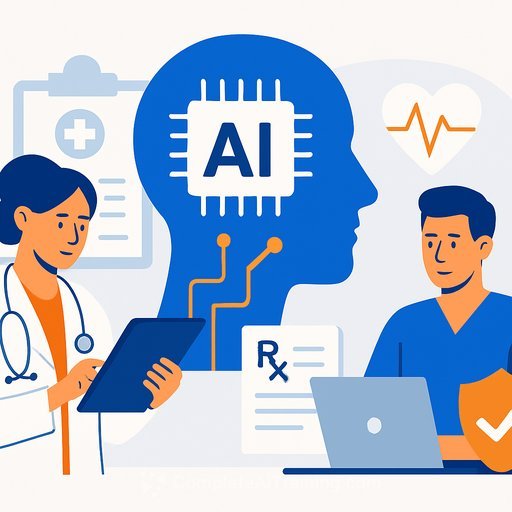
McCare Tech has launched what it calls the first AI orchestrator for healthcare. The platform, Orchestral, pulls data from scattered systems, connects it to AI, and turns it into decisions clinicians can trust. For leaders managing cost, staffing, and outcomes, this aims to fix the data problem that slows everything else down.
The core problem: fragmented data
Patient records, labs, imaging, and admin data sit in separate silos. That makes insights slow, inconsistent, and hard to scale across service lines. Traditional AI projects stall because the inputs are messy, the workflows are manual, and governance is unclear.
Without a unifying layer, you end up with duplicate tests, delayed decisions, and compliance risk. Regulatory requirements like HIPAA also force stricter controls, which many point solutions aren't built to handle.
What Orchestral does
Orchestral provides a single platform to coordinate data, AI models, and automated workflows across the enterprise. It's built to make systems work together instead of in silos, with a focus on explainable and adaptable AI.
- Health Information Platform: Standardizes data from all sources and enforces compliance. Think unified data access, audit trails, and security by default.
- Health Agent Library: A catalog of reusable AI models and clinical logic you can plug into care pathways, from triage to follow-up.
- Health AI Tooling: Tools for data teams to build workflows, generate insights, and automate steps in a transparent, clinically sound way.
Why this matters for healthcare leaders
Better data flow means fewer errors and faster decisions. Clinicians get clearer signals, not dashboards they don't use. Operations teams cut waste and reduce manual work.
As costs rise and staffing stays tight, a platform approach helps scale what works across sites and specialties. Company leaders say the impact could mirror breakthroughs like antibiotics or medical imaging-big claim, but the direction is clear: coordinated AI, grounded in unified data, improves care.
How to get value in the first 90 days
- Map your sources: EHR, LIS, PACS, RPM, claims, scheduling, and patient comms. Prioritize two to three high-impact workflows (e.g., readmission risk, sepsis alerts, imaging triage).
- Set governance early: Define clinical ownership, data access rules, and model approval criteria. Require explainability for any model touching care decisions.
- Pilot with tight scope: One unit, one condition, clear metrics. Build confidence, then scale.
- Integrate into the EHR: Deliver insights in existing workflows with minimal clicks. Automate the next action where safe (orders, follow-ups, notifications).
- Track impact continuously: Accuracy, alert adoption, turnaround times, and clinician feedback. Close the loop with weekly reviews.
- Upskill key roles: Train clinicians, analysts, managers, and process engineers on data quality, model limits, and operational use.
Operational metrics to watch
- Time from data capture to insight in the EHR
- Alert acceptance rate and override reasons
- Length of stay and readmission rates in targeted pathways
- Duplicate tests and unnecessary imaging
- Clinician minutes saved per patient episode
- Data completeness and interoperability error rates
What's different here
Collecting data isn't the win-turning it into reliable actions is. Orchestral focuses on explainability, interoperability, and consistent automation. That removes common blockers: scattered systems, opaque models, and manual handoffs.
If your strategy is outcomes-first, this approach fits: standardize data, operationalize AI, and give teams workflows they trust. The result is fewer errors, better judgments, and more capacity without adding headcount.
Next step
If you're building internal capability, structured upskilling can speed adoption. Explore the AI Learning Path for Process Engineers.
Your membership also unlocks: