
AI news ·
Oregon State study finds heavy AI use linked to declining critical thinking skills in students
Oregon State researchers found heavy AI use linked to a 41% drop in critical thinking and 66% decline in reflection among students. Tech-savvy students showed the strongest negative effects.
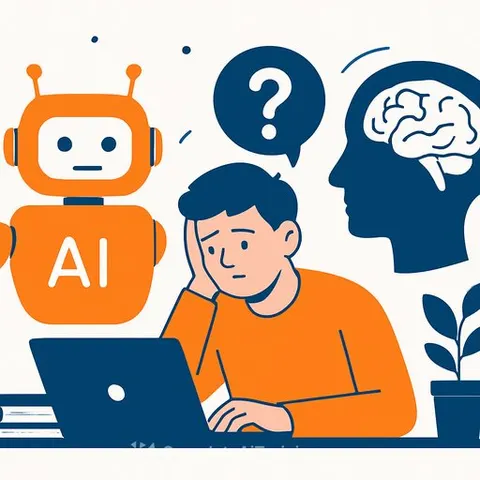
Oregon State study finds heavy AI use linked to weaker critical thinking in students
Researchers at Oregon State University have documented a concerning pattern: students who rely heavily on generative AI tools show significant declines in critical thinking and reflection skills. The study, led by graduate researcher Rudrajit Choudhuri and faculty advisor Anita Sarma, found that some students treat AI as a replacement for learning rather than a tool to support it.
The researchers measured specific cognitive impacts. Students showed a 66% decline in reflection, a 41% drop in critical thinking, and a 21% decline in the perceived need to understand concepts. The findings suggest students increasingly feel less obligation to grasp why something works if they can quickly get an answer.
One unexpected result challenged common assumptions about tech literacy. Students who were most comfortable with technology appeared more likely to experience negative effects from excessive AI dependence, not less.
The "cognitive offloading" problem
Sarma described the behavior as AI becoming a "cognitive crutch." When students outsource mental effort to the technology instead of working through problems themselves-a pattern researchers call "cognitive offloading"-they stop engaging deeply with material. Over time, this pattern could weaken independent thinking and problem-solving skills.
The timing of this research matters. Schools across the country continue introducing AI into classrooms. Portland Public Schools recently released a guidebook to help teachers and students navigate the technology, with district leaders emphasizing flexible guidance that can adapt as AI evolves.
What schools can do
Researchers acknowledge that outright AI bans are unrealistic given how deeply the technology is now integrated into education and daily life. Instead, they recommend schools focus on teaching students to use AI responsibly.
One proposed approach is adding "useful friction" to AI tools-features that encourage students to think through problems before receiving answers. This preserves the learning process while still allowing access to the technology.
Experts also encourage parent involvement. Families should discuss openly how students use AI for school and everyday tasks, exploring not just whether answers are accurate but also questions of ethics and responsible use.
For educators, understanding these dynamics is essential. AI for Education resources and guidance for teachers can help schools implement AI in ways that support rather than undermine learning outcomes.
The researchers hope their findings will inform future AI literacy programs and educational policies designed to balance technological advancement with long-term cognitive development.