
AI news ·
Organizations adopting AI sales training accelerate onboarding and reduce employee turnover
AI sales simulators cut new hire onboarding time by 30% to 40%. The tools let staff practice realistic customer scenarios before facing live buyers.
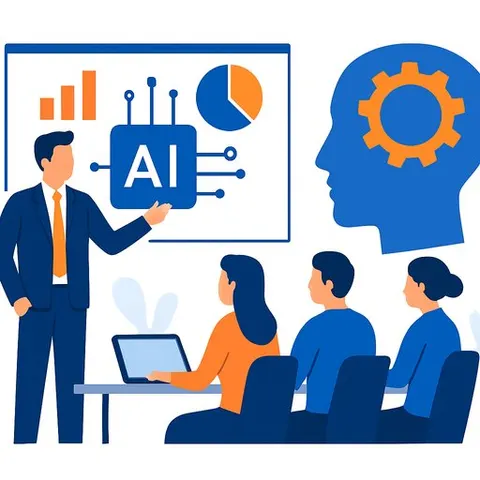
Organizations that adopt AI-driven sales training today are positioned to capture the same competitive advantage that early internet adopters seized in the 1990s. Those that wait face the same risk of obsolescence that swallowed skeptical companies three decades ago - while early movers are already reporting faster onboarding, higher protection product sales, and lower turnover.
Why organizations hold back
The hesitation to adopt AI-driven training platforms stems from a misunderstanding of what the technology is designed to do. Executives often view AI through a lens of risk and cost, worrying that integrating AI into training will turn their teams into script-reading automatons. There is also uncertainty about how to measure return on investment for software that can feel abstract.
For seasoned training directors, the apprehension is personal. When an organization introduces an AI tool, a trainer may wonder whether the software is there to replace them - stripping away the nuanced, human-to-human coaching that took decades to master. Frontline sales consultants, meanwhile, worry that AI tools will be another clunky management tracker designed to catch them making mistakes, making role play feel intimidating and unnatural.
Tools that make AI training work
Two specific technologies are changing how sales teams practice and learn. Interactive AI role-play simulators let users log into a platform and engage in realistic, voice-to-voice or text-to-text sales conversations. The AI plays the role of a skeptical buyer, a payment-focused customer, or a defensive prospect. This allows salespeople to fail safely, adjust their psychological framing, and build muscle memory before facing a live customer. Traditional role play is difficult to scale - a trainer cannot individually coach fifty salespeople every week on overcoming a specific objection. AI simulators solve that bottleneck.
AI-driven video generation platforms allow training directors to build and update curriculum without spending days scripting, filming, and editing static videos. These tools produce localized, dynamic video modules in a fraction of the time, keeping training current. A dealership group can push out a new strategy or compliance update to hundreds of users simultaneously overnight. For sales professionals looking to understand the broader range of AI for Sales applications, these training tools represent some of the most practical entry points available today.
The numbers behind the investment
The data shows AI training moves the needle across three operational metrics. First, onboarding: AI simulators compress the timeline by 30% to 40%. New hires can accumulate months of customer experience in their first two weeks by running dozens of simulated walkarounds and scenarios, getting them on the floor and closing deals faster.
Second, protection product sales improve when sales professionals train with rigorous, AI-supported scenarios. Their language becomes sharper and more proactive. They do not stumble through objection handling. Mastering compliance and psychological framing in a simulated environment lifts backend gross per retail unit.
Third, turnover drops. Sales turnover remains one of the highest hidden costs in retail automotive and power sports. Employees often leave because they feel unsupported or unequipped to succeed. An on-demand AI training ecosystem builds confidence and helps protect the organization's investment in human capital by giving people the practice reps they need to feel ready.
Why this matters for sales professionals
The professionals who look past the fear and embrace simulators and video platforms will help define the sales standard for the next generation. AI does not replace the human element - it handles repetitive, foundational muscle-memory building. That frees trainers to focus on high-level strategy and targeted mentorship based on the performance data AI provides. For training managers ready to build these capabilities, an AI Learning Path for Training & Development Managers offers structured guidance on integrating these tools into existing programs. The same script that played out with the internet in the 1990s is back. The window for getting ahead of the fault line is open, but it will not stay that way.