
AI news ·
Organoids and automation reshape drug discovery as animal testing declines
3D cell cultures that mimic human tissue are replacing animal models in drug discovery, backed by the FDA's 2025 move to phase out animal testing for some therapies. Automation and AI are making organoid research faster and more consistent.
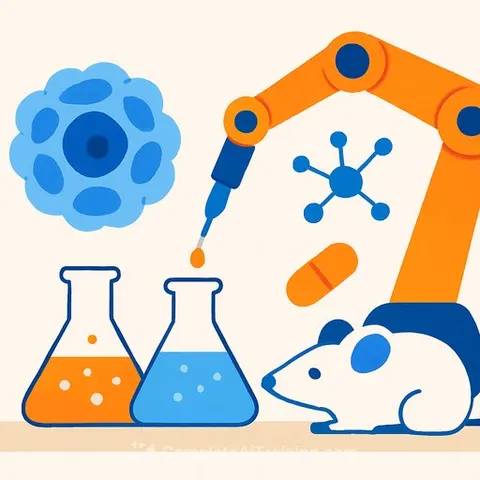
Organoids and Automation Are Reshaping Drug Discovery
Three-dimensional cell cultures that mimic human tissue are replacing outdated preclinical models. Paired with automation and artificial intelligence, organoids are accelerating drug discovery while reducing reliance on animal testing-a shift now backed by major regulatory agencies.
Organoid-based research addresses a persistent problem in pharmaceutical development: traditional models fail to predict how therapies will perform in humans. The FDA's 2025 decision to phase out animal testing requirements for monoclonal antibody therapies signals a broader regulatory shift toward human-relevant alternatives.
Why Traditional Models Fall Short
Two-dimensional cell cultures and animal studies have dominated preclinical research for decades, despite significant limitations. Two-D cultures lack the cellular complexity of living tissue. Animal models, while complex, don't account for human-specific genetic and physiological differences.
This disconnect produces high clinical trial failure rates. The pharmaceutical industry calls this pattern "Eroom's Law"-the inverse of Moore's Law-which shows that drug development efficiency has declined despite technological advances.
Organoids, derived from stem cells, recreate organ-specific functions and cellular interactions that 2D and simple spheroid models cannot. Researchers at UCLA and Emory University are already using automated organoid platforms to scale production and improve consistency.
Regulatory Pressure Accelerates Adoption
The FDA Modernization Act 2.0 and updated NIH guidelines now encourage alternatives to animal testing. The UK's Medicines and Healthcare products Regulatory Agency allows early review of non-animal data, giving developers confidence in applications based on organoid evidence.
These regulatory changes coincide with pharmaceutical industry pressure. Complex drug modalities-antibody-based therapeutics, cell and gene therapies-rely on human-specific mechanisms that animal models cannot adequately test. Organoids provide the platform these therapies require.
Automation Solves the Scalability Problem
Organoid culture has traditionally been labor-intensive and inconsistent. Growing brain organoids, for example, requires up to 90 days of meticulous manual work by experienced personnel. Results varied between labs and even between experiments in the same lab.
Automated cell culture systems standardize this process. AI-powered platforms monitor conditions in real time and guide researchers through culture decisions, reducing dependence on specialized expertise while ensuring reproducibility across sites.
This consistency matters. Large datasets from reliably cultured organoids enable the translational research needed to move therapies toward clinical trials.
Patient-Specific Testing Is Already Here
Early studies show organoids predict patient responses more accurately than animal models. Researchers have used patient-derived tumor organoids to identify which cancer treatments are most likely to succeed in individual patients-a step toward personalized medicine.
Dedicated organoid research centers and consortia, including the NIH's standardization initiative, are establishing best practices and fostering collaboration between institutions. This infrastructure accelerates wider adoption.
The Next Decade
Organoid applications will expand from disease modeling to novel drug testing. AI-driven analytics will enhance predictive power, helping researchers identify biomarkers and optimize drug dosing.
Most significantly, animal testing will likely decline as the default preclinical method. This shift improves both research outcomes and ethical standards.
The combination of organoid technology, AI Agents & Automation, and AI represents a turning point in how drugs move from laboratory to patients. By addressing inefficiencies in traditional discovery methods, these technologies reduce development time and cost while improving the relevance of preclinical data to human outcomes.
Researchers implementing these approaches may benefit from understanding how AI for Science & Research applies to their specific workflows and datasets.