
AI news ·
Overreliance on screens and AI causes Arizona students to lose foundational reading and writing skills
Arizona teachers warn screens and AI are eroding basic literacy. Schools with one-to-one tablets see declines in spelling and reading stamina as digital tools replace practice.
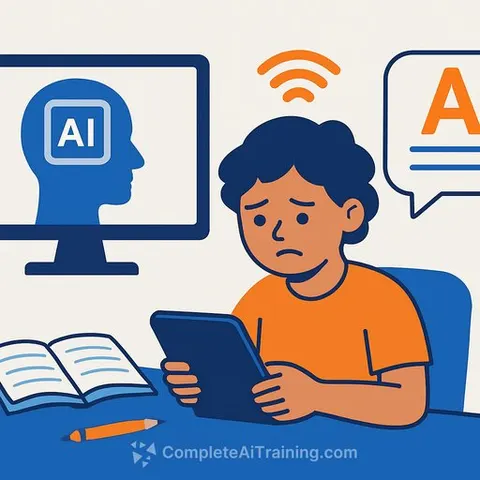
A growing reliance on screens, spell-check, and generative AI tools is eroding foundational reading and writing skills among students, according to a discussion on the Mike Broomhead show. KTAR News reporter Shira Tanzer joined the program to detail how these technologies, while convenient, are contributing to a decline in basic literacy competencies that educators have long worked to build.
The technology trade-off
Tanzer pointed to tablets as one culprit. Digital reading often encourages skimming and reduces the deep, focused engagement that print materials support. When students read on screens, they are more likely to multitask and less likely to retain complex information. Spell-check and grammar tools, once a safety net, now mean many students never internalize spelling rules or sentence structure, because correction is automatic.
Generative AI presents an even larger challenge. Students can now use AI to produce essays, summaries, and answers without engaging in the writing process. The result is a loss of practice in organizing thoughts, constructing arguments, and editing one's own work. Tanzer said the cumulative effect is that students arrive at higher grade levels missing the core skills that should have been cemented earlier.
Classroom consequences
Arizona teachers are seeing the impact firsthand. Students struggle with handwriting, spelling, and reading stamina. Assignments that require sustained writing often reveal gaps in grammar and vocabulary that were not as common a decade ago. The discussion underscored that the problem is not the existence of these tools, but an overreliance that leaves little room for skill-building.
The concerns raised align with broader discussions about AI for Education and the need to evaluate how digital tools are deployed. Schools that moved quickly to one-to-one tablet programs are now reassessing whether the benefits outweigh the drawbacks for younger learners.
Why this matters for education professionals
Educators and administrators face a direct challenge: balancing the undeniable benefits of technology with the risk of weakening foundational skills. The conversation points to a need for deliberate integration, where digital tools supplement rather than replace traditional reading and writing instruction. For teachers, this means scrutinizing how often students use AI or spell-check in formative stages and designing assignments that require genuine, unaided effort. The skills at stake-critical reading, clear writing, and focused attention-are not just academic priorities; they are essential for every career path students will pursue.