
AI news ·
Palantir expands AI partnership with Ukraine covering military and civilian uses
Palantir has expanded its AI work in Ukraine to cover both military and civilian projects, with CEO Alex Karp meeting President Zelenskyy in Kyiv to formalize the deal. The partnership includes AI intelligence systems and the Brave1 Dataroom.
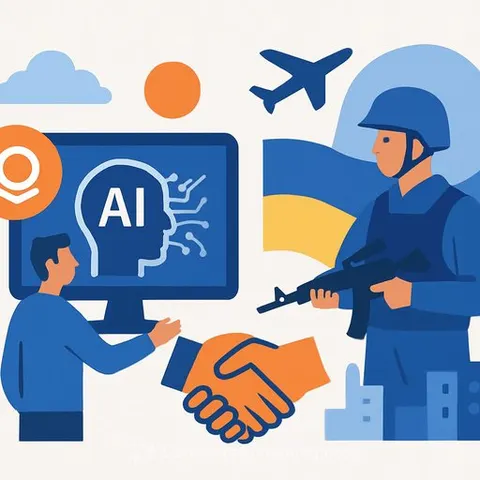
Palantir Deepens Ukraine Partnership, Expanding Government AI Role
Palantir Technologies has expanded its AI work in Ukraine to include both military and civilian projects, with CEO Alex Karp meeting President Volodymyr Zelenskyy in Kyiv to formalize the deepened collaboration. The partnership includes the Brave1 Dataroom and AI-driven intelligence systems supporting Ukraine's defense efforts.
For government officials and procurement teams, this development signals how data integration and AI decision tools are being embedded directly into national security and critical infrastructure workflows. Palantir supplies not just software, but full data infrastructure for a country managing active conflict and reconstruction simultaneously.
What This Means for Government Buyers
The Ukraine work demonstrates Palantir's approach to AI for Government in high-stakes environments. The company positions itself as a provider of mission-critical systems where switching costs are high and operational continuity matters.
This also puts Palantir in direct competition with Microsoft, Google, and smaller defense-focused software providers for government contracts. Each of these firms now has field experience deploying AI in active conflict zones and reconstruction efforts.
The Risks
Deeper involvement in conflict-related work increases geopolitical and ethical scrutiny. This can affect future government tenders or contract renewals in Europe and other regions where public debate on AI in warfare remains intense.
Concentration in sensitive government and defense workloads-including Ukraine and U.S. contracts-leaves the company exposed if political priorities, data regulations, or procurement policies shift.
The Opportunities
Successful deployment across military and civilian use cases in Ukraine strengthens Palantir's pitch to other governments and multilateral agencies seeking field-tested, AI Data Analysis systems for decision-making.
The Ukraine partnership reinforces the narrative that government demand for operational AI is a sustained growth driver, supporting the case for long-running, high-value contracts.
What to Watch
- How Palantir communicates concrete outcomes from Ukraine work-contract scope, renewal patterns, and expansion into broader reconstruction projects.
- How regulators and politicians in key markets respond to AI use in warfare and civilian data environments. This will shape contract pipelines across the industry.
- Whether Ukraine activity appears in disclosed government revenue and whether management links it to opportunities in other regions.