
AI news ·
Patients accept AI for scheduling but reject it for billing without human oversight, study finds
Patients accept AI for scheduling at 52% but drop to 37% for diagnosis and lower for billing, a 1,000-person survey found. Human oversight, not cost savings, is the deciding factor.
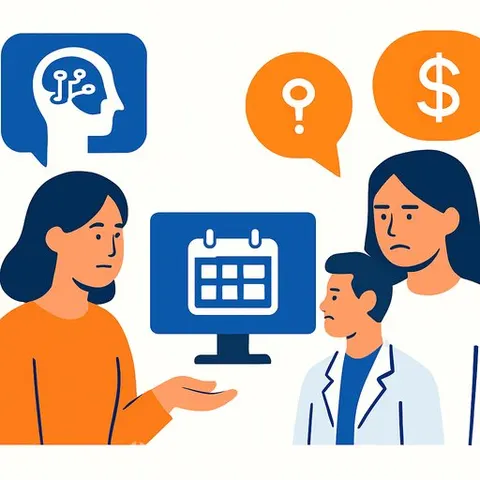
Health Systems Should Limit AI to Administrative Tasks, Patient Trust Data Shows
Patients will tolerate artificial intelligence in healthcare scheduling and appointment management, but reject it in billing and diagnosis without human oversight, according to a survey of over 1,000 adults. Health systems investing in AI should focus on areas where patient buy-in already exists and keep humans in the loop for sensitive workflows, researchers say.
The Healthcare AI Adoption & Trust Report, produced by Sogolytics, an experience management platform vendor, found stark differences in patient comfort depending on where AI is deployed. Patients showed 52% comfort with AI handling scheduling. That acceptance dropped to 37% for diagnosis and fell further for billing support.
Among patients who explicitly rejected AI in billing, 35% said no cost savings would change their minds. Their resistance stems from a need for human oversight, researchers found.
Human Access Drives Acceptance
The presence of a human representative matters most. When asked about AI providing cost estimates with reduced phone support access, only 16% of patients agreed-the lowest acceptance rate across all scenarios tested.
Guaranteed access to a human representative ranked as the top reassurance factor for 47% of respondents considering AI-assisted billing. The four most cited reassurance factors all centered on human presence and accountability, researchers said. Cost savings ranked fifth.
Current distrust in healthcare billing departments and insurance companies runs deep. Fifty-two percent of patients expressed reduced trust in health system billing, and 49% in insurance companies. Deploying autonomous AI in these sectors without oversight would worsen those numbers, researchers warned.
Age Divides Patient Experience
Younger patients aged 25 to 34 encountered billing friction at significantly higher rates than older patients. Sixty-three percent of younger patients reported billing problems, compared to 14% of seniors. This pattern held steady across every age group, suggesting both greater insurance complexity and lower system familiarity among younger patients, researchers said.
Health systems using AI in call centers are seeing different results. More than 94% of health systems deployed agentic AI for rescheduling, cancellations, and appointment verification, making these capabilities standard practice, according to a separate report on agentic AI.
Where to Invest
The data points to a clear strategy: invest in AI for Healthcare administrative automation where patients already accept the technology. For complex processes like diagnosis and billing, implement AI for Customer Support systems that keep humans accessible and in control.
Implementations must be transparent. When human agents become harder to reach, patient acceptance of AI solutions collapses. The difference between the most and least accepted scenario is not the technology itself-it is the presence of a human.