
AI news ·
Patients want AI in healthcare but require human oversight
A survey of 3,200 adults found 61% of patients accept AI in healthcare. However, 89% require a visible option to escalate to a human.
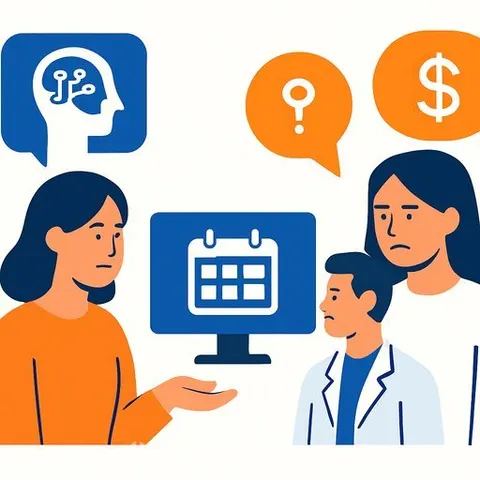
A survey of more than 3,200 adults across eight countries has found that patients are open to AI playing a role in their healthcare - but only when it comes with human oversight, transparent sourcing, and a clear path to escalate to a real person. The 2026 Connected Health Consumer Report from Salesforce, which surveyed 400 people in Australia and 400 in New Zealand alongside respondents in the US, Canada, Mexico, Brazil, the UK, and Ireland, reveals a patient population frustrated by administrative bottlenecks who see AI as a fix, provided strict governance conditions are in place.
"There's a clear signal to healthcare providers and technology companies: trust must be earned," Dr Bryan Tan, Chief Health Officer ANZ at Salesforce, said. "Patients want transparency, human oversight and the ability to remain in control of their own care every step of the way."
Patients accept AI - but with conditions
Globally, 61 per cent of patients reported being comfortable with agentic AI - a type of AI that can autonomously handle tasks and respond to queries - being used in healthcare settings. In Australia, that figure sits at 56 per cent, while in New Zealand it reaches 61 per cent. But comfort does not mean unconditional acceptance. Over nine in 10 patients in Australia (92 per cent) and New Zealand (91 per cent) said access to a real person is essential when interacting with AI-driven healthcare tools.
Patients also want to know how AI reaches its conclusions. Globally, 85 per cent want source transparency for administrative guidance, while 88 per cent expect the same for medical recommendations. Some 81 per cent said they would value an AI audit trail for administrative decisions, with 88 per cent wanting the same traceability for health recommendations.
Administrative friction is driving patients away
The report identifies a widening gap between the consumer-grade digital experiences patients expect and what healthcare delivers. Globally, 58 per cent of patients said they would delay or skip necessary healthcare to avoid difficult scheduling processes. Nearly half (49 per cent) reported abandoning a phone call after 10 minutes on hold. In the United Kingdom, the proportion of respondents who have delayed or skipped care due to long phone wait times climbs to 72 per cent.
Digital portals have not solved the problem. Some 46 per cent of patients found starting the process online too confusing. In Australia, 45 per cent of patients delay care due to confusing digital processes, while 50 per cent delay or skip necessary care because of scheduling difficulties. In New Zealand, those figures are 41 per cent and 57 per cent respectively. These scheduling and coordination breakdowns are where AI agents and automation could make the most immediate impact, according to the report's recommendations.
The frustrations extend beyond the waiting room. Patients reported spending an average of 13 minutes per visit re-entering data their provider already holds. For more than half of patients globally (60 per cent), poor record sharing between providers has meant repeating the same medical tests. Two in three (66 per cent) have run out of medication while waiting for a prescription refill to be processed. In both Australia and New Zealand, 60 per cent of patients have experienced running out of medication while awaiting prescription refill approval.
"[There is a] lack of coordination between providers, which often leads to delays, repeated paperwork and difficulty finding available appointment times that align across referrals," one millennial respondent from Australia told researchers.
Provider-backed AI wins the trust race
Where the AI comes from matters. Globally, patients are three times more likely to trust an AI agent integrated into their doctor's secure portal than one available through a public chatbot or general health website. In Australia, 56 per cent of respondents said they would trust a provider-integrated AI agent, compared with 18 per cent who would trust a public chatbot. In New Zealand, the split is 58 per cent versus 19 per cent. The pattern holds across all eight markets surveyed.
Only 15 per cent of patients globally said they would not trust medical guidance from an AI agent at all, a notable shift from 2024 when concern about AI in healthcare was the dominant sentiment. In early 2024, just 2 per cent of US adults turned to AI for healthcare information.
When asked about their primary concern when sharing health information with an AI agent, 36 per cent of patients globally pointed to accuracy of diagnosis or treatment. Data privacy and security came second at 30 per cent. In Australia, the figures mirror the global average, with 36 per cent citing accuracy and 30 per cent citing privacy. Clinician oversight was flagged by 11 per cent of respondents globally as their primary concern.
The 24/7 access imperative and post-care support
Patients are willing to trade human interaction for round-the-clock availability on routine tasks. Globally, 67 per cent of patients indicated they would rather access 24/7 help via an AI agent than wait to speak with a person during standard office hours. In Australia, 60 per cent expressed this preference, rising to 66 per cent in New Zealand. Nearly half of patients globally (49 per cent) said they prefer AI agents over humans for logistical tasks like billing and rescheduling, as long as there is an option to escalate to a human when needed.
The research also identifies a gap in post-appointment care. Nearly one in four patients (24 per cent) leave appointments confused about the next step in their treatment plan and wish they had a digital assistant to guide them. Some 70 per cent said they would feel less confused if an AI agent proactively checked in after their appointment. For patients managing chronic conditions, the appetite is stronger: 65 per cent globally said a 24/7 digital helper would make managing their health significantly easier, with the figure reaching 63 per cent in Australia and 64 per cent in New Zealand.
Globally, 78 per cent of patients said automatic reminders would help them take medications and follow care plans more consistently. Younger patients are leading this shift - 31 per cent of Gen Z patients said they would turn to AI first when unsure about next steps after an appointment, more than any other generation.
Why this matters for healthcare professionals
The report offers a clear implementation roadmap for healthcare providers: start with administration. Scheduling, billing, referrals, and care coordination are the areas where patient friction is highest and receptiveness to AI is strongest. The report cautions that in sensitive spaces like behavioural health or oncology, autonomous AI communications could alienate vulnerable patients. For healthcare professionals evaluating AI for healthcare applications, the trust premium on provider-integrated tools is the single most important finding - patients are three times more likely to trust AI embedded in a doctor's secure portal than any public alternative.
A separate Salesforce study of 500 US-based healthcare professionals found the workforce is equally ready for AI support. Healthcare administrative workers estimated AI agents would save them 10 hours of paperwork per week. Clinical teams predicted agents could reduce their clerical work by 36 per cent. Yet familiarity remains a barrier: only 38 per cent of healthcare workers initially recognised the term "AI agents." Once provided with a definition and use cases, 71 per cent predicted agentic AI would be essential to healthcare operations within five years.
The demand for a clear escalation path is nearly universal - 89 per cent of patients globally said a visible "escalate to human" option is essential for trusting AI-driven administrative support, and 90 per cent expect the same for medical support. For healthcare providers, the message is direct: AI can reduce administrative overload and improve patient access, but the human safety net must remain visible at every step.