
AI news ·
Pentland Brands replaces product photo shoots with AI-generated imagery
Pentland Brands replaced physical product shoots with AI imagery. This compresses wholesale timelines from weeks to days, allowing sales up to six months in advance.
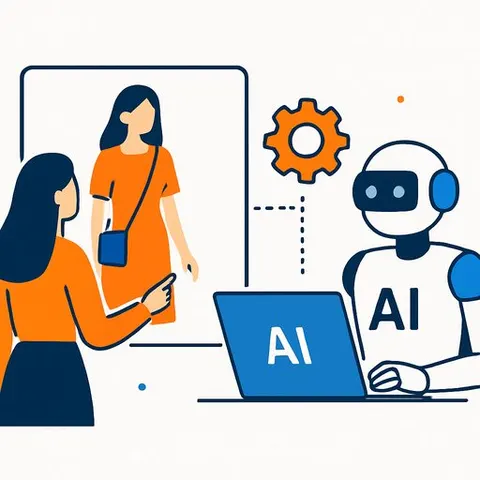
Pentland Brands has eliminated traditional product photo shoots for its wholesale selling packs, replacing them entirely with AI-generated imagery months before physical products exist. This shift, detailed at Shoptalk Europe 2026 in Barcelona, demonstrates how operations teams can bypass supply chain delays and compress timelines from weeks to days.
The company, which operates both wholesale and direct-to-consumer channels, must sell products to partners like Decathlon and JD Sports up to six months in advance. Previously, this required physical samples for shoots, creating bottlenecks when factories ran late or supply chains slipped.
A bottom-up approach to AI adoption
The initiative did not originate from a centralized technology mandate. Instead, Pentland launched an AI entrepreneurs programme inviting employees at every level to train on AI tools and develop business use cases. The company's chief executive set a clear expectation for this distributed experimentation. "We want AI to be a virus that infects the business," the executive said.
This approach yielded two primary categories of use cases: compressing operational timelines and solving structural coordination problems across global teams. For the creative and operations teams, generating product imagery solved a logistical hurdle that predated the technology itself.
Overcoming quality and data hurdles
Reaching publishable quality required significant iteration. "It looked fake for a long time," said Anna, a senior leader at Pentland. "It wasn't realistic enough to evoke genuine inspiration." Brands like Speedo, which require specific contexts like pool locations, demanded higher fidelity than generic outputs could provide, leading the company to partner with Grasswold AI for selling pack production.
Beyond imagery, the operations team developed a real-time negotiation tool. This system allows teams to model pricing, volume, and SKU combinations directly in meetings with suppliers. By running scenarios transparently in the room rather than retreating to spreadsheets, the company reduced back-and-forth communication and accelerated decision-making. Those looking to replicate this type of workflow automation can explore an AI Learning Path for Operations Managers to understand how to structure similar process improvements.
Acknowledged operational gaps
Pentland leadership was transparent about areas where the company still lags. The most significant blocker is data access. Despite running multiple business lines, the company has not yet built the semantic data layer needed for organization-wide querying, and definitions of revenue and margin currently differ across divisions.
The second gap is return on investment quantification. While executives have observed time and cost savings through anecdotal evidence, translating distributed, qualitative experimentation into a documented financial case remains an ongoing challenge. These two hurdles are common across organizations attempting to scale AI for Operations, where fragmented data and unproven ROI often stall progress.
Why this matters for operations professionals
The Pentland case illustrates that large-scale AI adoption rarely begins with a perfect, centralized technology strategy. It starts by establishing a permission structure for broad experimentation, followed by a rigorous review to consolidate the most effective use cases. For operations teams, the primary takeaway is that success depends less on the specific AI tools selected and more on building a repeatable process to turn scattered experiments into permanent operational capabilities.