How Gladly is redefining AI in CX for retailers and customers
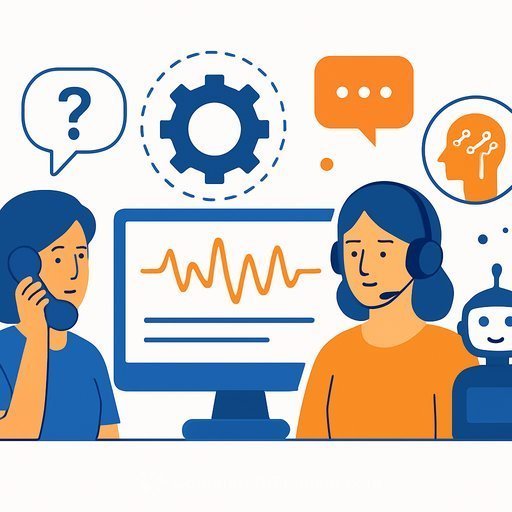
Phone support still matters. Gartner reports that 52% of customers use the phone at some point in their service experience, yet many are stuck repeating order numbers and spelling their names while they wait. That friction costs loyalty - PwC found 59% of consumers abandon a brand after several bad experiences, and 17% will leave after just one.
AI can fix the repeat-yourself problem - if it actually knows who the customer is. As one CX leader put it, the issue shows up in nine out of 10 complaints: people don't feel recognized. AI that has context removes wait time, stops the back-and-forth, and lets agents focus on real problems.
Why most CX AI misses the mark
Two common traps kill results. First, ticket systems break the customer relationship into isolated issues, so context gets lost. Second, standalone voice bots operate in a vacuum, so conversations feel generic and unhelpful.
The result is predictable: long handle times, annoyed customers, and agents acting like detectives.
A different approach: lifelong conversations with full context
Newer platforms like Gladly keep a single, lifelong conversation thread across channels. AI and agents pull from the same record: orders, preferences, history, and prior interactions. Brands can set the AI's tone and rules so it speaks on-brand and knows when to hand off.
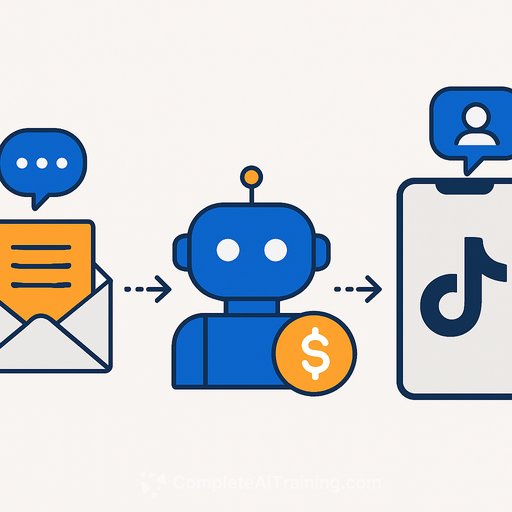
This model turns personalization into measurable outcomes. Retailers using Gladly report faster resolutions, lower handle times, and higher CSAT. One brand saw 20% of AI-assisted conversations lead to a purchase because the system knew what the customer bought and what they prefer.
The business impact is real: more than 131% year-over-year growth in AI ARR, with about half of new and expansion ARR tied to AI - and broad, enterprise-wide adoption.
Two outcomes to optimize: Resolutions and Assists
- Resolutions: End-to-end solves for common issues (order status, returns, sizing, shipping). This frees agents for complex, high-value conversations that build relationships and increase lifetime value.
- Assists: The AI gathers context, runs initial troubleshooting, and tees up insights before routing. Agents start ahead, customers feel understood, and the conversation moves faster. Example: recommending the right foundation shade based on purchase history.
Proof it works: KUHL turns support into a revenue driver
KUHL, the outdoor brand, outgrew a ticket-based system that forced add-ons for basic functionality and buried agents in busywork. They switched to Gladly for a unified customer profile - purchase history, current orders, and all channels in one place.
They trained AI to handle repetitive questions via chat and SMS using their knowledge base and brand voice. If a request is complex, the AI routes to an agent with context, and the handoff is seamless. Customers rarely notice the switch.
Results after implementation:
- AI now handles 59% of email inquiries and 27% of chat conversations
- Weekend email backlog dropped by 60%
- Revenue per call increased by 120% as agents shifted to consultative help and smart upsells
What to look for in an AI CX partner
- Unified profile: All channels, orders, and history in a single conversation thread
- End-to-end actions: AI that can resolve routine tasks, not just reply
- Assist workflows: Auto-gather context, summarize, and prep the agent
- Voice and chat continuity: Keep the same conversation across phone, SMS, web chat, and email
- Brand control: Configurable tone, policies, and guardrails
- Measurement: Clear reporting for containment rate, handle time, CSAT, conversion, AOV, and revenue influenced
- Security and privacy: First-party data controls and auditability
A practical rollout plan for support leaders
- List your top 20 intents by volume and revenue impact (status, returns, sizing, cancellations, exchanges, warranties, subscriptions)
- Decide what AI should own (straight-through), assist (prep and summarize), and avoid (edge cases, sensitive issues)
- Connect order, loyalty, and CRM data so AI and agents see the same context
- Codify tone, escalation rules, and refund/discount thresholds inside the AI
- Set weekly QA: sample transcripts, track containment, AHT, CSAT, and conversion-to-purchase; improve the knowledge base and prompts
- Train agents on AI-augmented workflows: reading summaries, using suggested replies, and upselling ethically with context
Metrics that matter
- Containment rate by intent
- Average handle time (AI-assisted vs. human-only)
- First-contact resolution and time-to-resolution
- CSAT and sentiment
- Conversion rate from service to sale, AOV, and revenue per conversation
- Agent capacity gained (tickets per agent, shrinkage recovery)
Where CX is heading
Conversations will follow the customer across channels without restarting. A chat that begins on the site continues over text or phone with the same context intact.
Static FAQ pages will give way to conversational experiences that brands own, creating a direct path from support to loyalty and repeat purchases.
Sources and further learning
If you're upskilling your support team to work alongside AI - prompts, policy guardrails, and assist workflows - explore practical training built for CX roles: AI courses by job.
Your membership also unlocks: