
AI news ·
Personal emergency response system market forecast to reach $11.5 billion by 2035, driven by home healthcare and AI monitoring demand
The global Personal Emergency Response Systems market will grow from $6.2 billion in 2025 to $11.5 billion by 2035. Mobile wearable devices with GPS now hold 54% of the market, with home healthcare driving most demand.
Personal Emergency Response Systems Market to Hit $11.5 Billion by 2035
The global market for Personal Emergency Response Systems (PERS) will nearly double over the next decade, growing from $6.2 billion in 2025 to $11.5 billion by 2035, according to market research from Future Market Insights. The 6.3% annual growth rate reflects sustained demand from aging populations and healthcare systems shifting toward home-based care.
Mobile PERS devices-wearable systems with GPS tracking and cellular connectivity-now account for 54.3% of the market. These systems work both indoors and outdoors, making them more practical than older stationary devices. Home healthcare settings represent the largest end-use segment at 61.8% of demand, as hospitals and providers seek cost-effective alternatives to institutional care.
What's Driving Growth
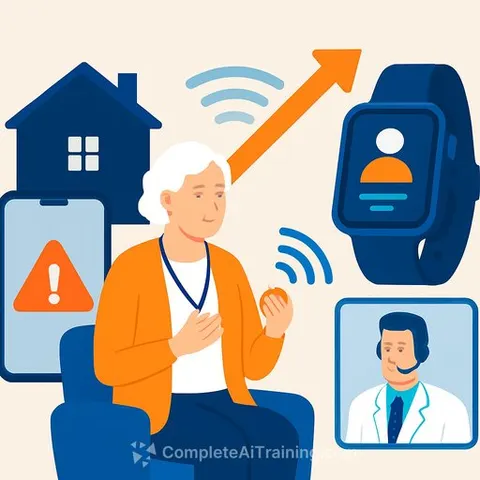
Three factors are pushing adoption: aging populations living independently, rising chronic disease prevalence, and integration of AI for Healthcare into monitoring systems. Modern PERS platforms now include AI-powered fall detection, voice-activated emergency response, and real-time health analytics.
Healthcare organizations are prioritizing devices that integrate with telehealth services, electronic health records, and smart home systems. This shift toward connected care ecosystems reduces hospital readmissions and improves response times during emergencies.
Regional Growth Patterns
India is the fastest-growing market, with an expected 7.2% annual growth rate through 2035. Government healthcare modernization programs and expanding emergency medical infrastructure are creating demand.
North America remains the largest revenue source due to advanced healthcare infrastructure and widespread telehealth adoption. Europe shows steady growth driven by aging populations, while Asia-Pacific is accelerating as healthcare systems modernize across the region.
Technology and Investment
Manufacturers are investing in sensor miniaturization, cloud-enabled platforms, and Generative AI and LLM algorithms for predictive health analytics. Battery life, waterproof designs, and cybersecurity compliance are becoming baseline requirements rather than differentiators.
Procurement is shifting from hardware-focused purchasing to subscription-based service ecosystems. Healthcare organizations increasingly evaluate vendors on device reliability, AI monitoring capabilities, and interoperability with existing systems.
Market Challenges
Data privacy and cybersecurity remain concerns as these systems collect sensitive health information. Regulatory compliance requirements vary significantly across regions, complicating global expansion. Competition from consumer mobile health applications is also intensifying.
Market maturity in developed regions means growth will depend on penetration in emerging markets and expansion into new use cases beyond elderly care.