Phenom Unveils AI Architecture Designed to Redesign HR Operations at Scale
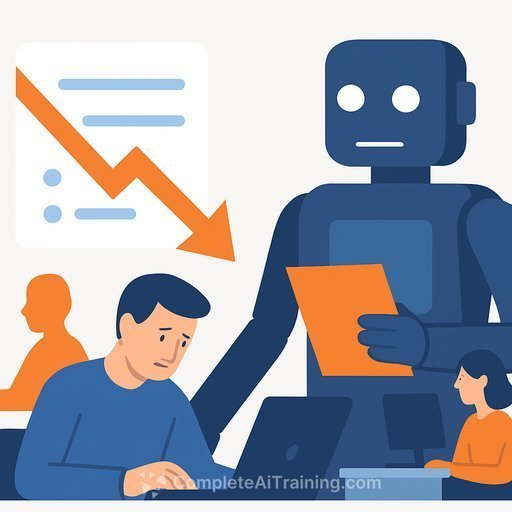
Phenom announced a new generation of AI architecture and service delivery models at its annual conference, shifting HR from task automation to what the company calls an "execution engine" that redesigns how work operates across organizations. The platform lets enterprises deploy AI agents tailored to specific roles and markets, with new governance capabilities meant to deliver measurable results in weeks instead of months.
The infrastructure connects and standardizes data across systems to deploy intelligence and agents where they matter most-across markets, geographies, labor environments, and workforce models-without the risk and overhead of building custom solutions.
How the Architecture Works
Phenom's layered AI structure consists of five components. Engines power talent operations at enterprise scale. Ontologies map how work, skills, and people connect across the enterprise on three dimensions: strategy that guides intelligence flow, structure that engineers how work gets done, and culture that defines purpose.
WorkOps provides flexible intelligence organizations can trust and act on. Experiences embed AI into every talent interaction. Use Cases are AI applications tailored to real workforce challenges. Agents execute talent operations from hire to retire.
All agents inherit the ontology, policies, and orchestration logic they need to adapt to each industry, function, role, workflow, geography, hiring urgency, and cultural context. Rather than building isolated products, Phenom's agents draw from the same underlying infrastructure, reaching the right moment in the talent lifecycle and providing value quickly without rebuilding for each new challenge.
Addressing Hiring Fraud and Synthetic Candidates
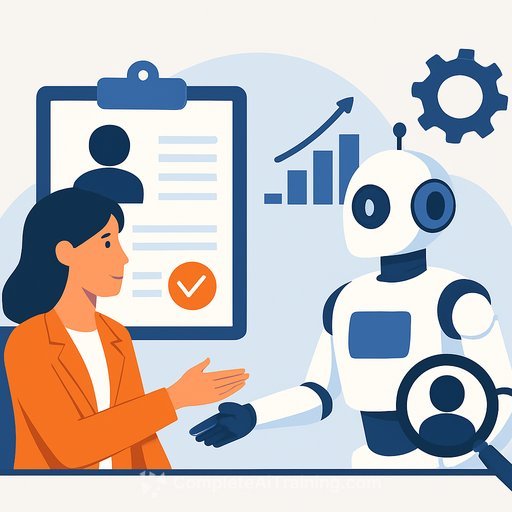
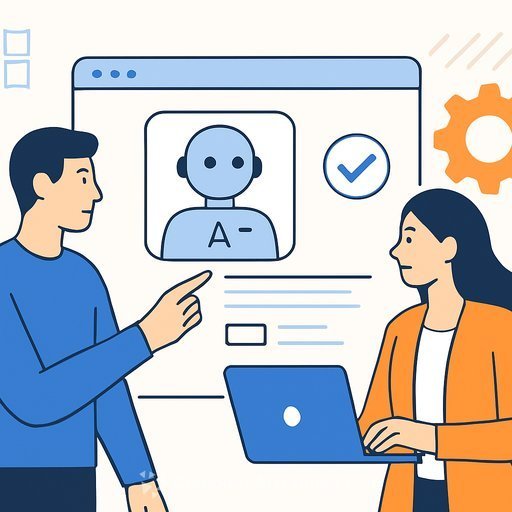
As generative AI makes it easier for candidates to fabricate credentials, proof of identity, and scripted interview responses, hiring fraud has evolved from isolated incidents into coordinated, multi-layered attacks on interviewers. Phenom's advanced candidate fraud detection includes a continuous, multi-step validation process that checks managers and talent acquisition teams.
Organizations can ensure hiring decisions reflect genuine candidates-not synthetic or AI-generated illusions-with cognitive assessments, AI interview capabilities, meeting assistants that surface competency gaps in real time, and integrity insights that flag AI-generated response patterns and coordinated candidate fraud networks.
Hypercell Operating Model for HR
General automation breaks when hiring conditions change. When a talent shortage emerges, sudden application surge, or regulatory shift occurs, legacy systems apply the same workflow regardless of context, forcing companies back into manual processes.
Phenom's hypercell operating model reimagines how work gets done with AI by bringing context to every situation. A hypercell is a self-contained, intelligent unit that makes its own decisions while still operating as part of a larger system. For HR, the intersection of each role, market, and moment requires its own tailored strategy rather than a forced fit into a generic workflow.
Individual hypercells respond to local conditions autonomously, while the broader environment stays coordinated. This gives organizations the flexibility of distributed decision-making without sacrificing enterprise-wide consistency.
Orchestration Engine Oversees AI Agents in Real Time
Most automation tools are rigid and break when exceptions occur. Phenom's Orchestration Engine oversees and governs AI agents that can take immediate action, enforce policies, and notify when human intervention is required in real time. Organizations are supported with guardrail and routing policy creation, decision tracking, compliance agent review, and hiring manager dashboards.
Managers can step in, send a follow-up, or override a next action at any point without switching systems.
Workforce Redesign Closes the Gap Between Strategy and Execution
The pressure to adopt AI is enterprise-wide, but the task-level intelligence required to act on it remains fragmented. Workforce data sits in disconnected systems, while critical questions about skills, capacity, and performance go unanswered.
Phenom Work Redesign turns scattered data into actionable insight by identifying existing skills and gaps within the workforce, and recommending opportunities for reskilling or deploying AI to accelerate performance. The new Work & Task Ontology connects the way work actually gets done in the organization across roles, task potencies, and proficiencies.
Global enterprises can get ahead of shifting markets and focus on strategic decision-making with a unified approach.
Service Delivery Models Accelerate Value
Traditional SaaS implementations celebrate implementation as the finish line. Momentum stalls for most organizations there. Phenom's Value Acceleration Model and AI Agents & Automation bootcamps replace the old model with a proven standard to deploy AI quickly and continuously as needs evolve, ensuring customers demonstrate value in weeks instead of months.
The Value Acceleration Model pairs customers with dedicated Phenom solution architects to align AI deployment with clear business objectives, establish milestone-based deployment paths with outcomes at every stage, and provide continuous post-launch optimization. Workforce analytics create a baseline understanding of the customer to expedite implementation by aligning context with industry best practices.
AI Bootcamps compress the learning curve through immersive programs that build internal AI fluency across HR, IT, and talent teams, equipping organizations to run, retain, and redirect AI-driven hiring and retention strategies independently. Bootcamps use process intelligence to identify critical roles and workflow blockers to rapidly deploy agents in a few weeks.
Responsible AI and Compliance Updates
Phenom announced its first conformity assessment under the EU AI Act and updated governance guidance on the use of biometric data in its Fraud Agent. The governance model now incorporates the NIST AI Risk Management Framework and the most recently published OECD Guidance.
A Responsible Deployment Guide for the Voice Agent provides customers with scoring rubric guidance, algorithmic audit support, and risk mitigation resources for various use cases.
Mahe Bayirddhi, CEO and co-founder of Phenom, said: "Every organization wants to move faster, but speed without context is chaos. How fast you move depends on how well your AI infrastructure translates business strategy into HR operations grounded in data, not gut feeling. At Phenom, we've built a system that understands what can be automated and where human intervention is required, codifies your culture and workflows into real intelligence, and deploys the right agents at the right moment. The result is AI that doesn't just do more. It is AI that amplifies your workforce by doing precisely what your business needs when you need it most."
For details on the latest AI for Human Resources applications, Phenom hosts an HR Innovation Showcase on April 22, 2026.
Your membership also unlocks: