
AI news ·
Ping An Insurance shifts from mobile apps to AI agent model to unify services across its 250 million customers
Ping An Insurance is replacing its app-based model with AI agents that handle banking, insurance, and healthcare in one interaction for 250 million customers. The company will build specialized financial and medical agents, not general-purpose tools.
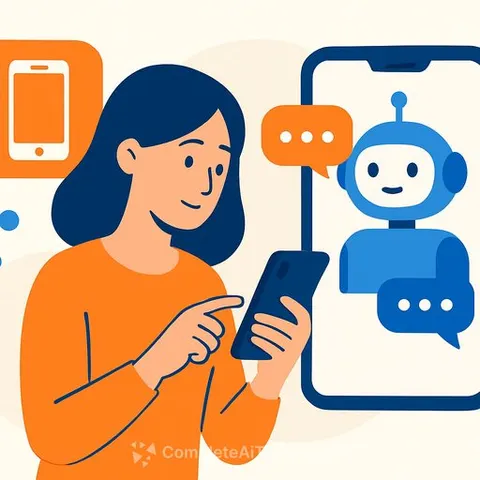
Ping An Insurance Shifts Services to AI Agents, Moving Beyond Apps
Ping An Insurance Group is moving away from its app-based service model toward AI agents that can handle multiple financial and medical services in a single interaction, according to Wang Xiaohang, the company's chief technology officer.
The shift addresses a core problem: Ping An's 250 million customers must switch between separate apps to access banking, insurance, healthcare, elderly care, and lifestyle services. With AI agents, customers can request services with a single sentence and receive answers across financial, medical, health, and lifestyle categories-both online and offline, including hospital networks and roadside assistance.
The company plans to extend access beyond mobile phones to smart speakers, corporate health portals, and telemedicine platforms.
Professional Expertise Over General-Purpose Tools
Ping An will not build general-purpose AI assistants like those from ByteDance or Alibaba. Instead, it will develop specialized agents with financial or medical expertise that matches or exceeds industry professionals, Wang said.
The difference matters. Financial and medical services require professional judgment, regulatory compliance, and trustworthiness. A chatbot designed for daily consumer needs cannot handle the responsibility these sectors demand.
Achieving this requires more than loading an AI with professional knowledge. The agents must align their thinking and decision-making logic with actual experts in their fields, Wang said.
Multiple Agents Working Together
Professional services in the real world rarely come from a single person. Medical care requires multidisciplinary teams. Wealth management involves family advisors, specialists, and insurance experts coordinating their work.
Ping An's AI agents will operate the same way. Rather than a single agent attempting to handle all requests, multiple specialized agents will collaborate to deliver professional solutions, Wang said.
This approach reflects how insurance, financial advisory, and medical services actually function-through coordination across expertise areas rather than isolated individual decisions.
For insurance professionals, this signals a shift in how customer service infrastructure will operate. Understanding AI for Insurance and AI Agents & Automation will become increasingly relevant as these systems move into production.