
AI news ·
PNNL uses AI agents to speed up discovery of microbes and plants for critical mineral extraction and bioproduction
Four national labs are using AI agents and robotics to run biology experiments autonomously, cutting research timelines from years to weeks. The OPAL project targets plant oil production and rare earth metal extraction from soil.
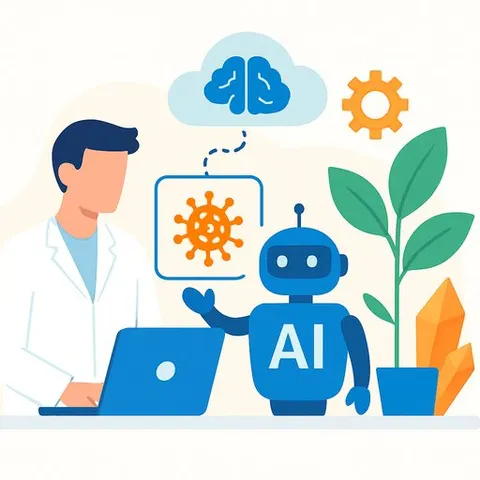
AI Now Decoding the Language of Plants and Microbes to Meet National Needs
Researchers at Pacific Northwest National Laboratory and three partner institutions are teaching AI systems to interpret biological data in real-time, replacing manual laboratory work with autonomous experiments designed to accelerate discovery in microbial research and plant optimization.
The effort, called the Orchestrated Platform for Autonomous Laboratories (OPAL), is a Department of Energy investment tied to the Genesis Mission. It combines AI agents and automation with high-throughput experimentation to compress research timelines from years to weeks.
Four National Labs, One Biological Powerhouse
PNNL leads the microbial testbed alongside Lawrence Berkeley National Laboratory, focusing on how organisms look and behave when grown under specific conditions. Oak Ridge National Laboratory contributes plant phenotyping expertise. Argonne National Laboratory brings protein structure analysis. And Berkeley Lab connects microbial functions to their underlying genes.
PNNL's new Anaerobic Microbial Phenotyping Platform (AMP2), which became operational in January 2026, automates the manual steps of sample preparation and experiment transfers. Robotic systems handle the physical work, but the real innovation comes from control software and AI agents that run continuous experiment cycles without human intervention.
The platform integrates mass spectrometry and metabolomics instruments that identify proteins and measure chemical changes in organisms. This data feeds directly into AI systems designed to spot patterns and suggest next steps.
Teaching AI to Read Biology
A connected project called OPAL FAMOUS (Foundational AI Models for Optimizing and Understanding Biological Systems) tackles a fundamental problem: AI models trained on human language don't automatically understand the "dialects" of biology-gene sequences, protein structures, instrument readings, growth patterns.
PNNL researchers are building AI agents that ingest raw data from different sources and translate it into a common language that other AI systems can act on. These agents will function as the central nervous system of automated laboratory platforms, interpreting results and directing the next experiment.
"For biology, one of the most underappreciated and difficult tasks in AI training is finding data that's in the right format," said Chris Oehmen, a researcher on the project. "Through OPAL FAMOUS, we are creating agents that ingest raw data and translate it into terms that an AI agent can understand and then act upon."
Two Immediate Priorities: Oils and Metals
OPAL researchers are currently optimizing Thlaspi arvense, a plant commonly called field pennycress, to produce useful oils while extracting nickel from soil. The plant shows promise as a cover crop that could reduce dependence on imported critical minerals.
The team is also working with soil microbes like Pseudomonas putida to extract rare earth metals through a process called biomining, where organisms naturally break down minerals in rocks. In its first two months of operation, AMP2 identified key biological pathways to improve critical mineral recovery under laboratory conditions.
"Microbes and plants work well together-you can use either one to make the other one better," Oehmen said.
Speed and Scale as Scientific Tools
The real value isn't just faster experiments. Automation and AI enable researchers to run far more tests and generate larger datasets than manual methods allow, potentially revealing patterns that wouldn't emerge from smaller studies.
"This is about much more than simply making current processes faster and more efficient," said Douglas Mans, interim Associate Laboratory Director of Earth and Biological Sciences at PNNL. "Automation and AI are vehicles for true scientific innovation. We can perform many more experiments and generate much larger datasets that will lead to new insights that we cannot even imagine."
The work directly supports DOE priorities to reduce dependence on Chinese supply chains while building U.S. leadership in the bioeconomy. If successful, the approach could accelerate the discovery and optimization of microbes and plants for producing commodity chemicals, biofuels, and critical materials.
For researchers in AI for Science and Research, OPAL demonstrates how autonomous systems and machine learning are moving beyond analysis to active experimental design-where AI doesn't just interpret results but decides what to test next.