
AI news ·
Pope Leo's AI encyclical needs Trump, not the UN, to succeed
Pope Leo's encyclical rightly warns that a few tech executives hold dangerous control over AI development. But his fix-leaning on the UN-ignores the institution with real democratic power: the U.S. presidency.
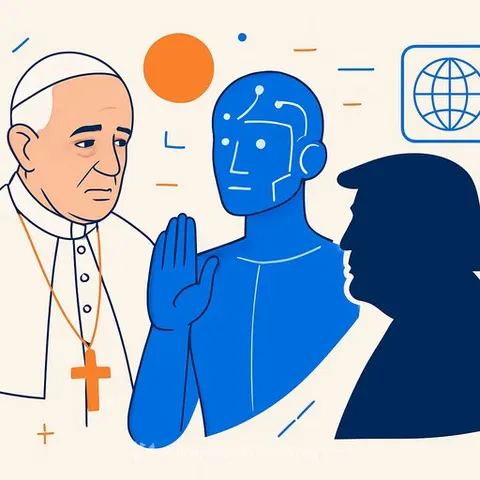
Pope's AI Encyclical Identifies the Problem but Misses the Solution
Pope Leo's first encyclical tackles a genuine problem: a handful of tech executives control AI development, and that power needs oversight by public authority. But his proposed solution-relying on the United Nations and international bodies-sidesteps the institution that actually matters: the U.S. presidency.
The encyclical, "Magnifica Humanitas," correctly identifies what's at stake. A few companies led by a small group of executives have concentrated control over technology with profound consequences for society. That concentration of power needs to answer to the common good, not corporate interests.
The transparency problem is real
Leo is right about transparency. If we want ethical AI systems, the public needs to know who inside tech companies is responsible for training these machines, what rules they're instilling, and what those rules actually are.
The systems themselves cannot think morally. As Leo writes, AI "do not possess a body, do not feel joy or pain" and "do not have a moral conscience." Humans supply all of that-the values, the judgment, the responsibility. Tech companies shouldn't be trusted to set those guardrails alone.
The public must also recognize that AI outputs aren't neutral. Results conform to someone's chosen criteria and expectations. Skepticism about supposedly objective findings is warranted.
Where the encyclical falters
Leo's faith in international organizations doesn't match his own definition of democracy. He affirms that democracy requires "effective participation of citizens, enables them to elect and peacefully replace their leaders and prevents power from being monopolized by small elite groups."
Most international bodies fail that test. The United Nations, which Leo emphasizes as essential for regulating AI, operates through structures where citizens have no direct voice and cannot remove leaders.
Leo downplays the role of elected national governments, instead favoring vague "collaborative efforts" among political leaders, labor groups, business, and scientists. He appreciates the speed of AI development but doesn't acknowledge that political responses need equal urgency.
Who actually holds the power
The presidency matters more now than before. AI has serious implications for government institutions and how they function. That concentration of technological power requires a concentrated political response.
If commonsense AI regulation is going to succeed, it needs more than papal endorsement. It needs the backing of the president and the voters who elected him. Those are the institutions with actual democratic legitimacy and enforcement power.
Leo identified the problem correctly. He just looked in the wrong direction for the solution.