
AI news ·
Predictive AI could cut billions in preventable healthcare costs but faces structural barriers to adoption
U.S. healthcare spending hit $4.9 trillion in 2023, with up to $935 billion wasted on late-stage care. Predictive AI can flag disease risk before symptoms appear, but most health systems still don't use it.
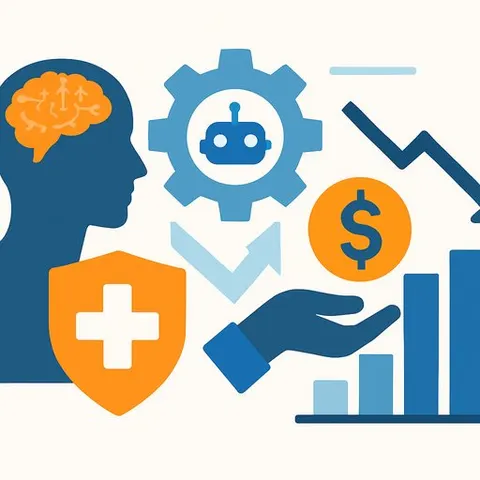
U.S. Healthcare Spends $4.9 Trillion Yearly. Predictive AI Could Stop Billions in Waste.
The U.S. healthcare system treats disease after it arrives, not before. Clinicians intervene late, when outcomes are harder to change and costs are far more difficult to contain. The result: a system that reacts to decline instead of preventing it.
Healthcare spending reached $4.9 trillion in 2023, nearly 18% of the nation's GDP. About 90% of that spending goes toward managing chronic and mental health conditions that could be mitigated with earlier intervention. Yet peer-reviewed research suggests up to 25% of total healthcare costs-roughly $760 billion to $935 billion annually-are wasteful, driven by inefficiencies and late-stage care.
This isn't a failure of effort or expertise. It's a failure of timing.
The Gap Between Risk and Intervention
Chronic conditions like cardiovascular disease, kidney disease, diabetes, COPD, and depression do not begin at diagnosis. They progress gradually, shaped by compounding risk factors over time. Yet care models treat the first major clinical event as the starting line.
By the time symptoms surface, patients have often crossed biological thresholds that are difficult or impossible to reverse. Heart failure alone can add tens of thousands of dollars per patient each year in cardiac-related claims. Advanced cases reach into the hundreds of thousands over time. Similar patterns appear across other chronic conditions.
For decades, clinical care relied on symptoms, episodic testing, and point-in-time assessments. That approach made sense when early risk was difficult to quantify. Today, data availability has exploded and computational power has matured. AI for Healthcare can now model disease trajectories before symptoms appear, offering clinicians a clearer view of where a patient is headed.
What Predictive Models Can Do
Predictive AI doesn't replace clinical judgment-it augments it. By analyzing large patient populations over time, these models surface early risk signals that traditional screening often misses.
Health systems that have adopted clinically validated predictive models are already seeing measurable results. Earlier intervention reduces preventable hospitalizations, slows disease progression, and improves long-term patient stability. Financial savings follow improved care, not cost-cutting. When systems stay ahead of decline, both patients and providers benefit.
Yet predictive prevention remains the exception rather than the standard. Many reimbursement structures still reward intervention after deterioration instead of action before it. Providers are compensated for treating advanced illness, not for preventing it.
Addressing Legitimate Concerns
Skepticism around AI in healthcare is understandable. Clinicians and policymakers are right to question transparency, bias, and the risk of overreliance on automated systems. Poorly designed tools can create noise instead of clarity, eroding trust and clinical confidence.
Any technology that influences care decisions must meet rigorous standards of validation and ethical deployment. But rejecting predictive tools outright carries its own risk. Clinically validated, responsibly designed AI enhances human expertise. The answer is not less insight, but better integration-ensuring predictive intelligence delivers clear, actionable signals clinicians can trust.
Ignoring early risk does not preserve the status quo. It guarantees continued preventable harm.
The Next Step
If healthcare reform is serious about improving outcomes while controlling costs, predictive intervention must become foundational, not optional. Embedding AI Data Analysis into standards of care allows clinicians to act earlier, patients to stay healthier, and systems to reduce preventable complications by design.
The tools already exist. What's required now is the commitment to use them, before the next crisis, not after.