
AI news ·
Preventivehealth.ai deploys physician digital twins in US clinics, keeping doctors in charge of clinical decisions
PreventiveHealth.ai deployed its AI in 400+ practices and digital twin systems across 100+ providers. Most health AI never leaves trials.
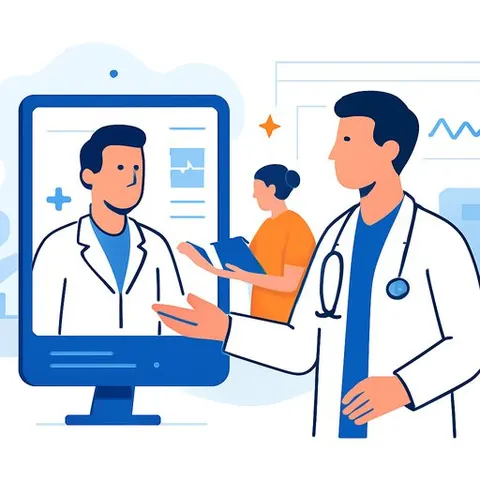
PreventiveHealth.ai has deployed its clinical AI assistant, Dr Kai, across 400+ provider practices at one of America's leading functional medicine chains, while its physician digital twin systems now operate inside networks with 100+ providers and health systems incorporating physicians from UT Health Houston. These deployments represent a rare shift from proof-of-concept to production in an industry where most AI products never leave the trial phase.
Health care resists new technology in ways other industries do not. Trust, judgment, accountability, and clinical outcomes carry weight that no algorithm alone can bear. Each successful implementation demands physician buy-in, IT readiness, compliance approval, and operational integration-hurdles that kill most healthtech AI projects before they reach real patients.
What makes these deployments different
PreventiveHealth.ai focused on integrating its models into existing clinical systems rather than building standalone tools. Dr Kai assists doctors during real-world patient encounters while keeping physicians fully responsible for clinical decisions and oversight. The approach sidesteps the friction that comes from asking hospitals to rip out legacy infrastructure.
The company's physician digital twin systems are trained on individual doctors' treatment approaches, communication styles, and decision-making patterns. These deployments span domains including menopause care, gastroenterology, gut health, and longevity medicine. The partnership that began with a single introduction expanded into a system-wide installation covering physician workflows, patient participation, and practice-level operations.
Trust remains the unsolved problem
For a decade, health care has wrestled with whether AI can scale care without damaging the doctor-patient relationship. Most companies have chased efficiency first-automating documentation, admin tasks, patient communications, and some clinical interpretation. The promise is scale at lower cost.
But health care does not behave like other sectors. "People continue to trust doctors more than machines, and doctors remain cautious that complex clinical judgement could be reduced to a simplified AI output," said Abhinav Kejriwal, who leads PreventiveHealth.ai. Regulators are also increasing scrutiny on accountability for AI-driven care decisions. Trust-not model performance-remains the binding constraint.
For professionals working with AI for Healthcare, this trust gap shapes every deployment decision. Physicians will reject tools that feel like black boxes, and patients will resist care that seems automated.
The physician-centric model
Kejriwal built PreventiveHealth.ai to extend physician expertise rather than replace it. The platform's core concept-physician-specific digital twins-learns how individual doctors actually practice medicine. These systems preserve clinical oversight while expanding a doctor's reach beyond the constraints of a single schedule.
The idea crystallized during Kejriwal's time at Stanford, after completing computer science studies at UC Berkeley. He saw that even highly skilled physicians spend years developing diagnostic judgment that remains bottlenecked by time and capacity. Many AI systems tried to solve scalability by reducing physician involvement, which weakened clinical trust. Kejriwal took the opposite path. "The aim of technology is not to replace or eliminate skilled humans but to make healthcare more reachable and cost-effective," he said.
His previous tenure at The Times of India Group-where he led restructurings, acquisitions, and enterprise-scale initiatives-shaped how he navigates the complex organizational dynamics of health systems. Those projects involved siloed stakeholders, regulatory barriers, and significant risk exposure, terrain that closely mirrors health care.
Two paths for healthcare AI
Health care AI is splitting into two diverging trajectories. The first automates and optimizes-reducing physician involvement to cut costs. The second augments physicians, keeping their judgment inside the care delivery loop. PreventiveHealth.ai is firmly on the second path.
"Healthcare was never meant to be scaled by removing physicians from the system," Kejriwal said. "The real opportunity with AI is to extend the reach of medical expertise while preserving the trust, judgment, and accountability that patients still depend on."
As the company continues rolling out across US health systems, the question has shifted. It is no longer whether AI belongs in health care, but how to deploy it without undermining the trust patients expect from the system.
Why this matters for healthcare professionals
If you work in health care, the PreventiveHealth.ai deployments signal where the ground is moving. AI adoption inside clinical settings is no longer theoretical-it is happening inside networks with hundreds of providers. The winning approach pairs AI with physician oversight rather than sidelining doctors. For clinicians, this means the near-term future involves learning to work alongside AI assistants and digital twin systems that mirror their own clinical reasoning. For health system leaders, the lesson is that physician buy-in and integration into existing workflows determine whether AI reaches production-or stalls at the pilot stage.